
Back to all articles

LakeOps articles

Product updates, best practices, and engineering insights from the LakeOps team — the control plane for Apache Iceberg.

27 articles

Iceberg Lakehouse with AI Agents: A Guide — AI agent robots navigating an Apache Iceberg lakehouse with analytics dashboards, AI brain, and governance shield icons, Build like Netflix subtitle
Apache IcebergLakehouseLakeOpsData Platforms

Iceberg Lakehouse with AI Agents: A Guide

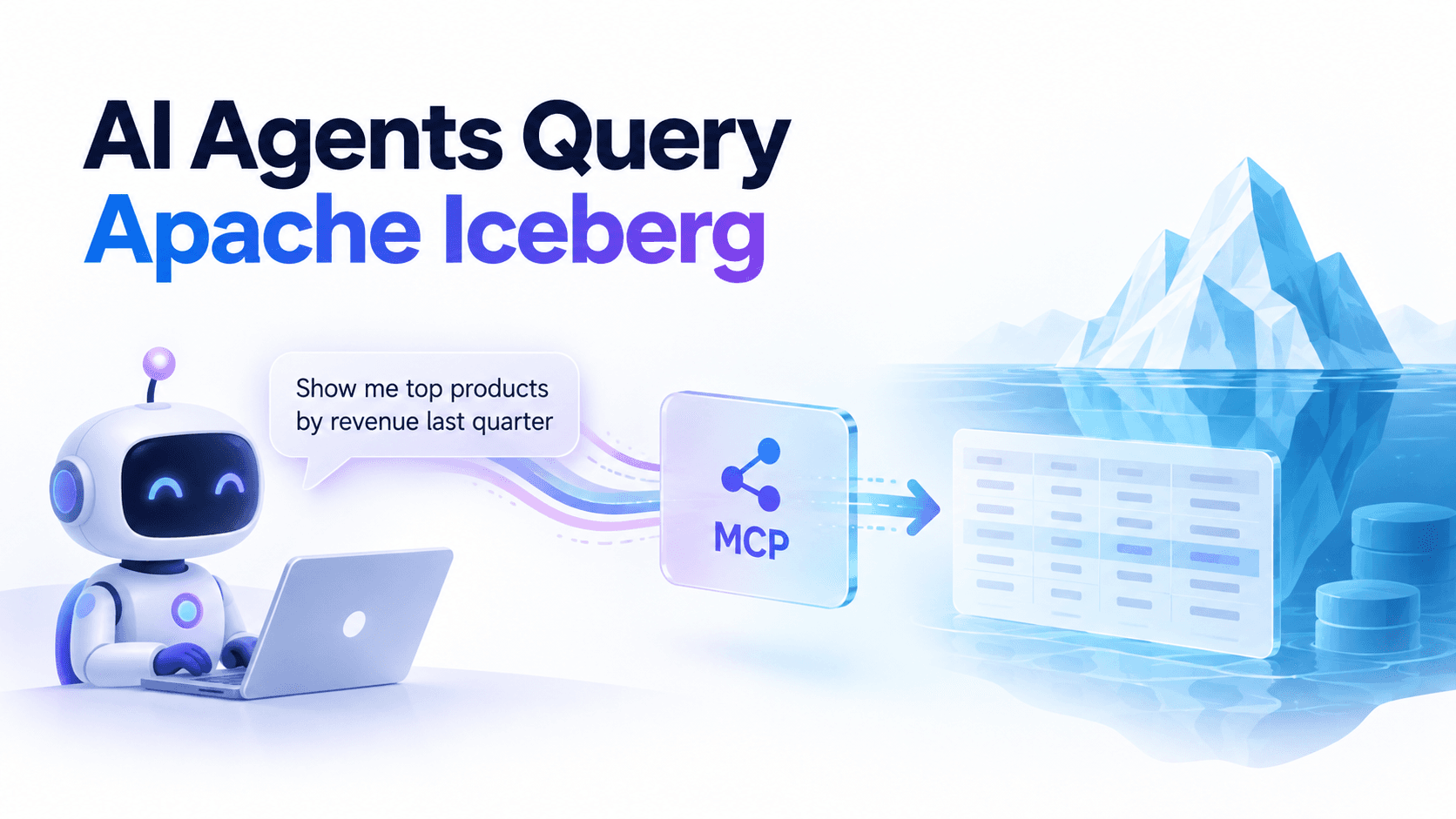
AI agents are becoming primary consumers of Iceberg lakehouse data — querying tables iteratively, at high frequency, and without human review. This guide walks through the five components your infrastructure needs to support agentic workloads — MCP connectivity, guardrails, multi-engine routing, self-optimizing storage, and observability — and shows how LakeOps provides each one.

Jonathan Saring
Jonathan Saring
24 min read
Intelligent Lakehouse — Build like Netflix. LakeOps control plane with observability, optimization, policies, and routing over Spark, Trino, Presto, and BI/ML on Iceberg and S3. 10x query performance, up to 80% lower storage costs, reliable at massive scale, fully automated.
Apache IcebergIntelligent LakehouseLakeOpsData Platforms

Intelligent Lakehouse: Build Like Netflix

Netflix spent years building an intelligent lakehouse — Polaris for catalog management, Autotune for compaction, janitors for cleanup, and Metacat for observability. LakeOps lets every team build the same — and go beyond — in minutes. Here is what an intelligent lakehouse actually requires, and how LakeOps provides each component.

Jonathan Saring
Jonathan Saring
19 min read
AWS Glue Iceberg Optimization — an S3 bucket with scattered data objects funneled through an optimization lens into a geometric iceberg, with icons for Search, Analytics, and Tuning
Apache IcebergAWS GlueCompactionTable Maintenance

AWS Glue Iceberg Optimization: A Practical Guide

AWS Glue provides native Iceberg support for cataloging, ETL, and built-in table maintenance — but production lakehouses hit limitations fast. This guide covers Glue catalog configuration, ETL best practices, compaction tuning, common pitfalls, and how a dedicated control plane fills the operational gaps.

David W
David W
20 min read
Databricks to Iceberg smooth migration — Databricks and Apache Iceberg connected by a data bridge, with table data flowing into an open Iceberg lakehouse
DatabricksApache IcebergLakeOpsDelta Lake

Databricks to Iceberg Smooth Migration

Databricks to Iceberg smooth migration opens a multi-engine lakehouse — not a platform exit. Databricks stays central for ML and Spark; Iceberg adds Trino, Snowflake, and open catalogs. Five tools: LakeOps, UC managed Iceberg, Delta UniForm, Spark, and Lakehouse Federation.

David W
David W
18 min read
Fixing Small Files in Apache Iceberg — scattered small data cubes compacted into larger organized file blocks flowing toward a geometric iceberg
Apache IcebergCompactionSmall FilesTable Maintenance

Fixing Small Files in Apache Iceberg: A Practical Guide

Small files silently degrade every Apache Iceberg lakehouse — inflating S3 costs, slowing query planning, and bloating metadata. This guide covers root causes, measurement, manual and automated fixes, and how to eliminate the problem at scale.

Rob M
Rob M
19 min read
Apache Iceberg on AWS S3 — architecture diagram showing Iceberg metadata layers, AWS services, and the data lakehouse stack
Apache IcebergAWS S3Data LakeLakeOps

Apache Iceberg on AWS S3: A Guide

Apache Iceberg on AWS S3 is the standard architecture for open lakehouses. This guide covers how Iceberg's metadata hierarchy maps to S3 objects, the AWS services ecosystem (Glue, Athena, EMR, Redshift, S3 Tables), configuration best practices, performance optimization, table maintenance, and the operational components needed for production deployments.

Rob M
Rob M
24 min read
Reducing AWS S3 cost with Apache Iceberg — diagram showing S3 storage and API cost vectors from Iceberg write patterns and the optimization strategies that address them
FinOpsAWS S3Apache IcebergLakeOps

Reducing AWS S3 Cost with Iceberg: A Guide

AWS S3 bills for Iceberg lakehouses are inflated by small files, orphan data, retained snapshots, metadata overhead, and scan amplification. This guide quantifies each cost vector with S3 pricing mechanics and walks through five strategies — compaction, expiration, layout optimization, storage tiering, and engine routing — to cut storage and query spend.

Rob M
Rob M
20 min read
Snowflake to Iceberg migration — Snowflake tables flowing into an Apache Iceberg lakehouse, illustrating a hybrid multi-engine architecture where Snowflake remains a valued component
SnowflakeApache IcebergLakeOpsData Platforms

Snowflake to Iceberg Smooth Migration

A practical guide for senior data engineers expanding Snowflake into a multi-engine Iceberg lakehouse. Covers five production tools — LakeOps, managed Iceberg, Open Catalog sync, Spark, and AWS Glue — with migration patterns, operational trade-offs, and a phased rollout sequence.

David W
David W
17 min read
Annual cloud bill infographic showing Iceberg lakehouse spend doubling year over year — FinOps and cost reduction framing for data platform teams in 2026
FinOpsApache IcebergLakeOpsCloud Cost

State of Iceberg FinOps and Cost Reduction in 2026

State of Iceberg FinOps in 2026: where lakehouse spend leaks, what to measure, how autonomous management and optimization are replacing manual maintenance — and a practical survey of tools from cloud optimizers to control planes.

David W
David W
24 min read
Iceberg Lake for Data Analytics: Optimization Guide — iceberg on water with analytics dashboard showing 9.4× query speed, 68% cost efficiency gain, and 82% less data scanned
Apache IcebergData PlatformsData LakeLakeOps

Iceberg Lake for Data Analytics: Optimization Guide

Eight optimization layers for data platform engineers running BI, ad-hoc SQL, and aggregation pipelines on Apache Iceberg — from partition design and file sizing through compaction, routing, and continuous maintenance.

Jonathan Saring
Jonathan Saring
15 min read
LakeOps Data Lake Insights showing metadata health alerts across Iceberg tables — manifest fragmentation, snapshot accumulation, and partition skew
Apache IcebergData PlatformsData LakeLakeOps

Iceberg Metadata Lifecycle: Maintenance and Optimization

A deep technical guide to managing the metadata layer that makes Apache Iceberg fast — snapshots, manifests, metadata.json files, and Puffin statistics — covering expiration, consolidation, orphan cleanup, and the sequencing that prevents production incidents.

Jonathan Saring
Jonathan Saring
19 min read
Iceberg lakehouse cost reduction — cost waste flows through LakeOps autonomous operations to deliver 80% savings
Apache IcebergLakeOpsCloud CostFinOps

7 Iceberg Lakehouse Cost Reduction Strategies

Iceberg lakehouses silently accumulate cost from small files, dead snapshots, orphan data, unoptimized layouts, and over-provisioned compute. Seven practical strategies — from deploying an autonomous control plane to leveraging partition evolution — that production data teams use to cut lakehouse spend by up to 80%.

Jonathan Saring
Jonathan Saring
9 min read
Optimizing Iceberg Lakehouse Performance — problems (small files, fragmented manifests, unsorted data, delete files) flow through autonomous maintenance into faster queries, lower costs, higher throughput, and healthier data
Apache IcebergLakeOpsQuery PerformanceData Platforms

Optimizing Iceberg Lakehouse Performance

Iceberg tables degrade silently — small files from streaming, unsorted data, fragmented manifests, accumulated delete files. Each one caps query speed regardless of engine. Six concrete optimization layers, how they interact, and how autonomous maintenance keeps every table at peak performance.

David W
David W
11 min read
Iceberg Table Maintenance Solution Comparison — side-by-side feature matrix for LakeOps, AWS Glue, S3 Tables, Snowflake, BigLake, Cloudera, and Starburst
Apache IcebergCompactionLakehouseData Platforms

9 Iceberg Table Compaction Tools Compared for Production Lakehouses

Compaction keeps Apache Iceberg lakehouses fast and lean — but every tool approaches it differently. A side-by-side look at nine production options: LakeOps, AWS Glue, Amazon S3 Tables, Snowflake, Google BigLake, Cloudera, Starburst, Dremio, and Databricks.

Jonathan Saring
Jonathan Saring
17 min read
LakeOps lakehouse control plane — connected to Iceberg catalogs on the left, query engines on the right, with observability, autonomous optimization, and cost management in the center
Apache IcebergLakeOpsLakehouseFinOps

Iceberg Lakehouse Optimization with LakeOps

A practical walkthrough of optimizing an Apache Iceberg lakehouse end to end — from connecting catalogs and diagnosing table health through autonomous compaction, lifecycle management, and multi-engine routing to measurable cost and performance outcomes.

Rob M
Rob M
16 min read
From data swamp to modern Iceberg lakehouse — illustrated journey from scattered files and broken schemas through Apache Iceberg to a managed lakehouse with a control plane
Data PlatformsData SwampApache IcebergLakehouse

From Data Swamp to Modern Iceberg Lakehouse

Every data lake starts with a promise of unlimited flexibility — and most end up as a swamp. Stale files, broken schemas, no observability, and engineers spending more time maintaining pipelines than analyzing data. Apache Iceberg fixed the reliability gap. A lakehouse control plane fixes everything else. A practical guide to the full transition — component by component.

Jonathan Saring
Jonathan Saring
23 min read
Optimizing Iceberg Lake Compaction — scattered small data-block cubes funnel through a compaction machine onto a conveyor belt of optimized blocks, leading to a crystal-clear iceberg lakehouse
Apache IcebergCompactionLakehouseLakeOps

Optimizing Iceberg Lake Compaction: A Guide

Compaction is the most impactful operation in an Apache Iceberg lakehouse — and the hardest to get right at scale. File merging is the easy part. Knowing when to trigger it, what sort strategy to apply per table, how to avoid conflicting with other maintenance, and how to do it without spinning up expensive JVM clusters — that is the real problem. A breakdown of what modern compaction actually requires.

Jonathan Saring
Jonathan Saring
16 min read
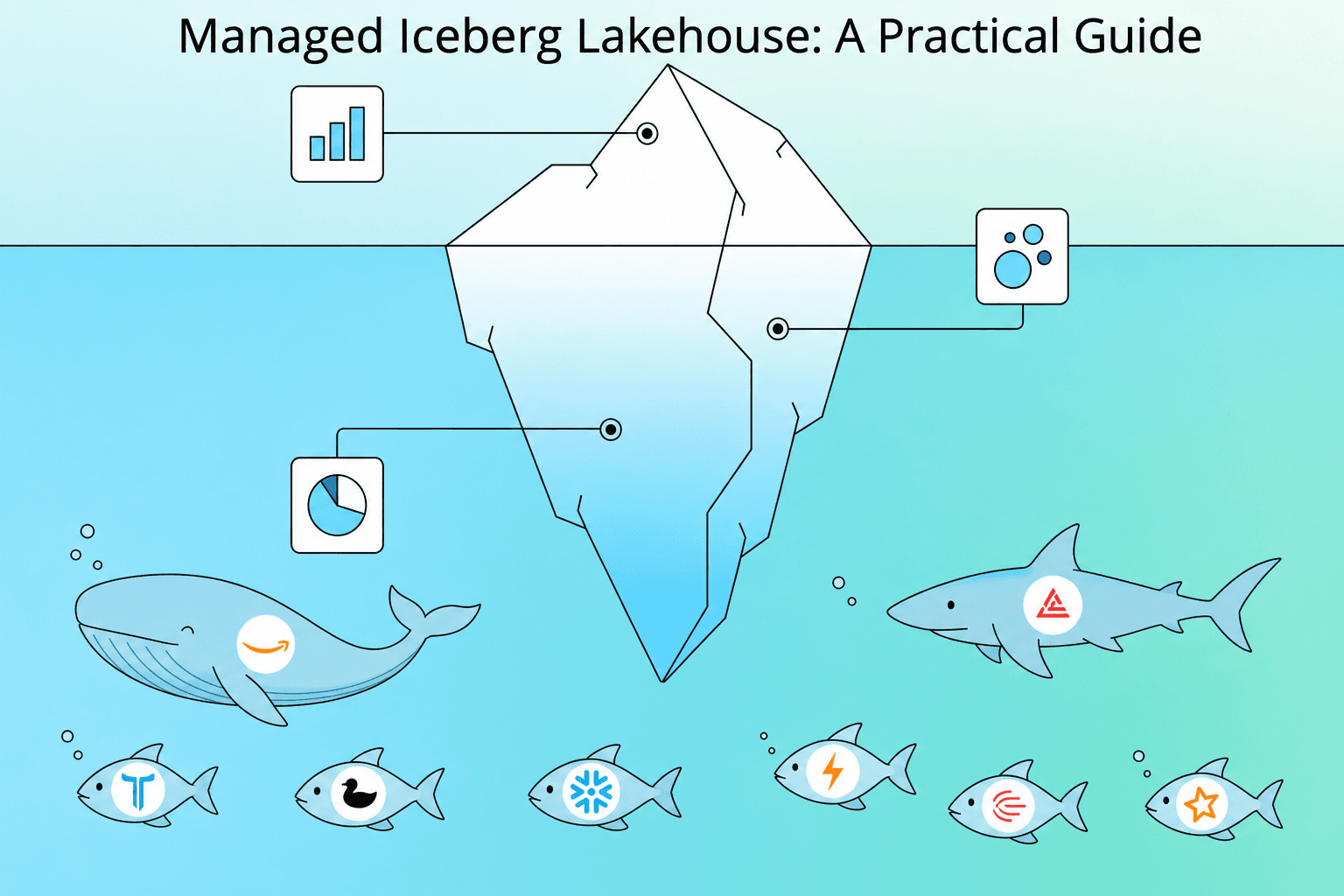
Iceberg lakehouse optimization — multi-engine ecosystem (AWS, Databricks, Trino, DuckDB, Snowflake, Flink, and more) around a shared Iceberg lake, with observability and optimization above the waterline
Apache IcebergLakehouseLakeOpslakehouse optimization

Iceberg Lakehouse Optimization — The Right Way

Apache Iceberg gives your lakehouse warehouse-grade reliability on object storage — but the format does not optimize itself. A practical guide to every operational pillar a production Iceberg lakehouse needs — from lake-wide observability and query-aware compaction to snapshot lifecycle, metadata health, and governance — and how LakeOps runs it all from a single control plane.

Jonathan Saring
Jonathan Saring
21 min read
LakeOps table metrics showing records distribution, file size distribution, and table size growth over the last 30 days
Apache IcebergLakeOpsFinOpsData Platforms

Autonomous Iceberg Table Maintenance for Data Lakes

Iceberg tables need continuous maintenance — compaction, snapshot expiration, manifest optimization, and orphan cleanup — but manual scripts break at scale. A deep look at what autonomous table maintenance means in practice: how telemetry-driven orchestration replaces reactive firefighting and keeps every table healthy without human intervention.

Rob M
Rob M
16 min read
Modern lakehouse architecture: LakeOps control plane for autonomous management and optimization — observability, compaction, routing, AI guardrails, and governance above Iceberg on S3, with catalogs and multi-engine compute (Spark, Trino, Snowflake, Databricks, and more)
Data PlatformsApache IcebergSnowflakeDatabricks

From Databricks and Snowflake to an Open Data Platform

For a decade, Snowflake and Databricks defined enterprise data. Then the lakehouse emerged — open formats on open storage. What was missing was the operational layer to make it work at scale. An autonomous control plane turns a lakehouse into a managed open data platform — without the lock-in.
Jonathan Saring
Jonathan Saring
18 min read
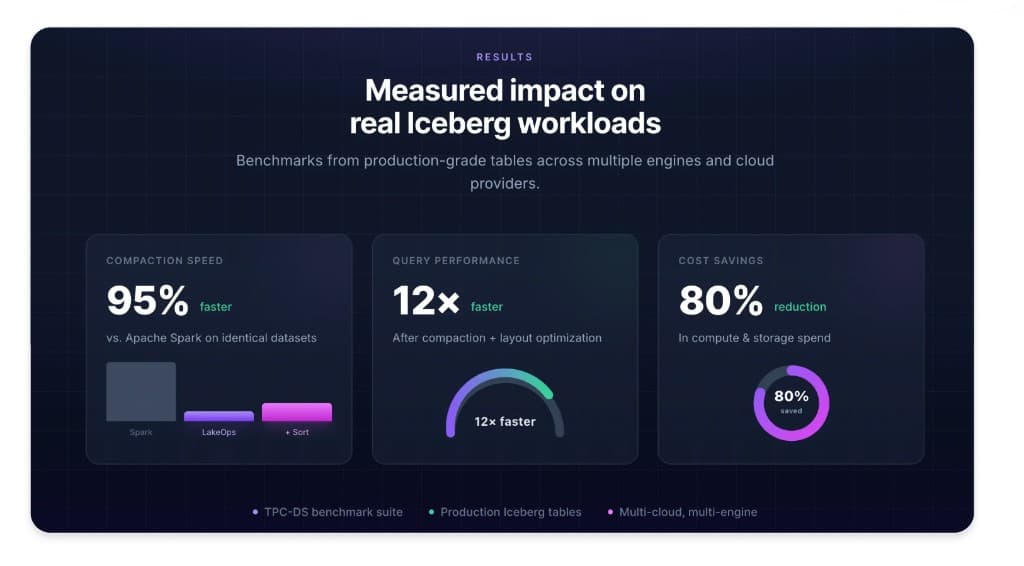
LakeOps measured results on real Iceberg workloads: 95% faster compaction, 12x query performance improvement, 80% cost reduction
Apache IcebergLakeOpsCloud CostFinOps

Apache Iceberg Cost Optimization in 2026

Your Iceberg lake is overcharging you from four directions at once — storage bloat, query compute waste, compaction overhead, and engineering time. This post breaks down exactly where each dollar goes and how autonomous table management eliminates the waste without touching your pipelines.

David W
David W
22 min read
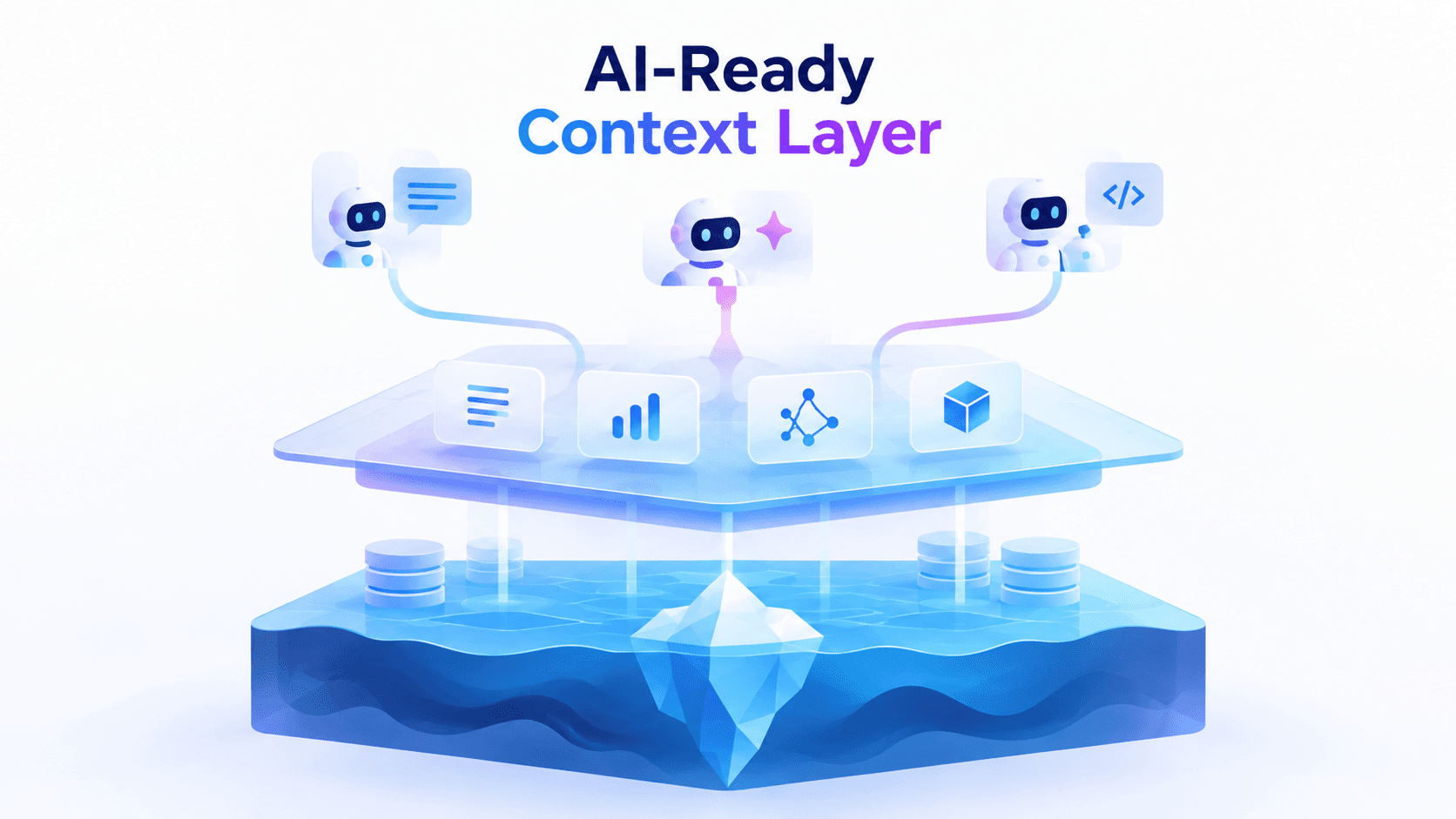
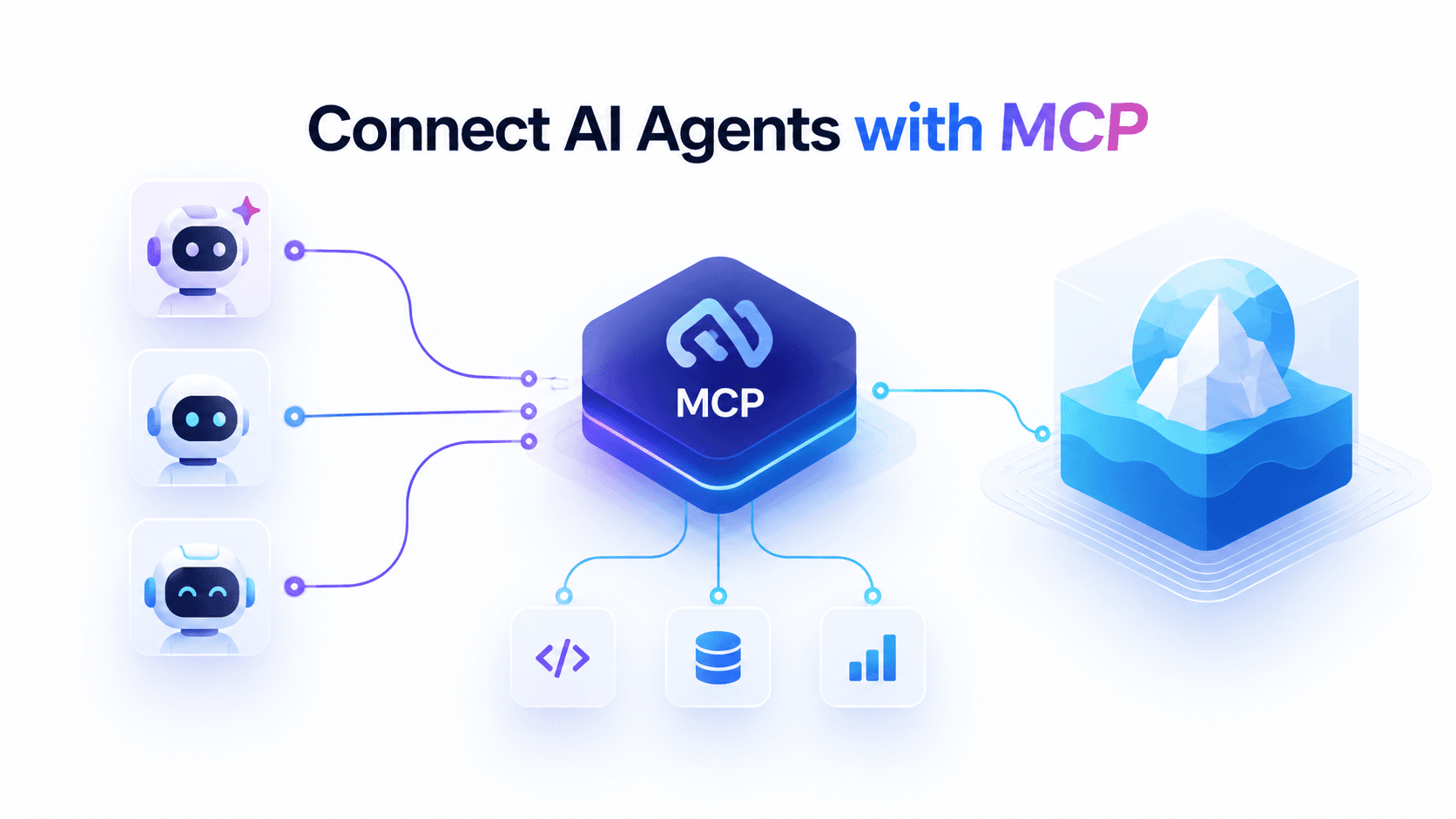
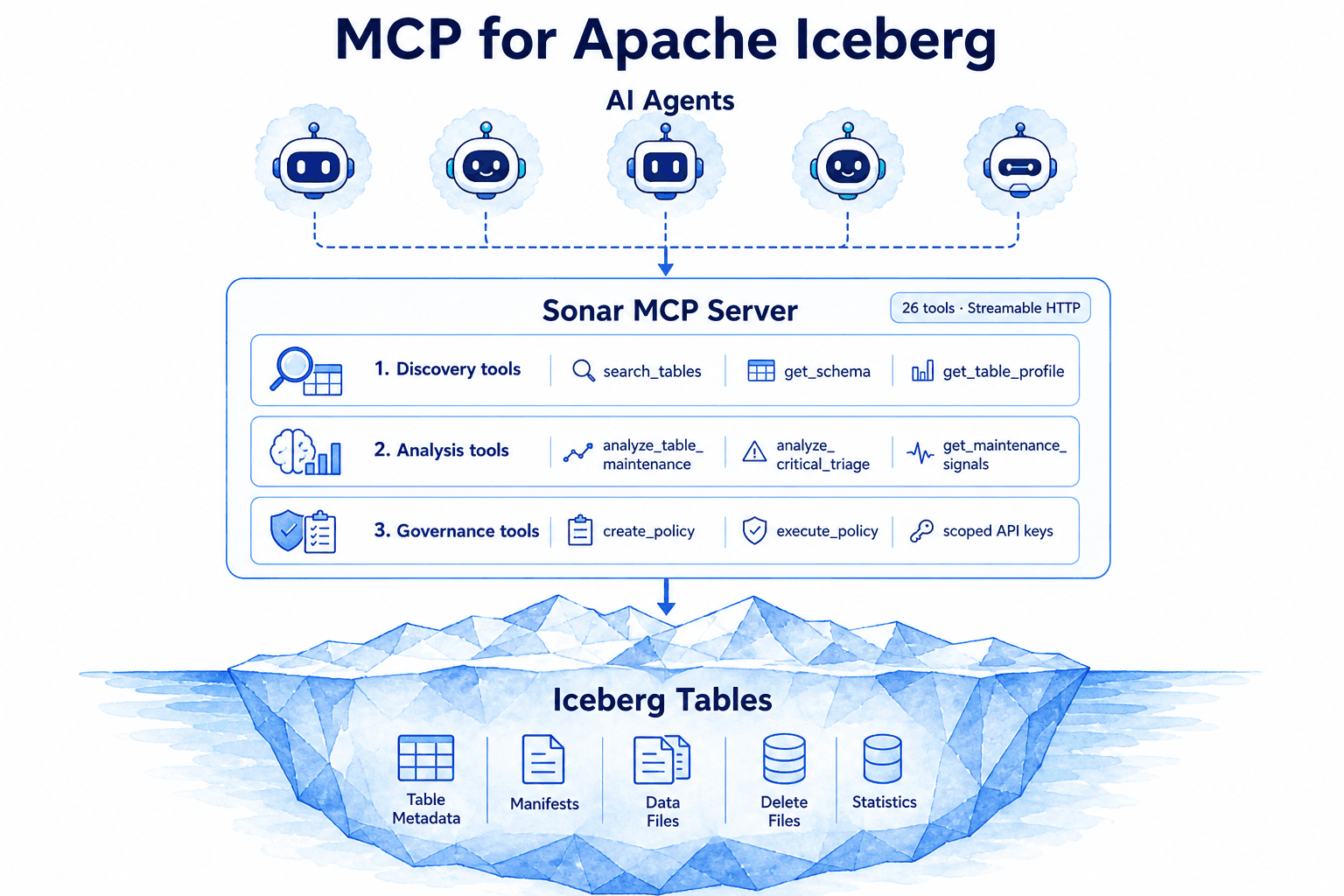
LakeOps control plane for AI agents — MCP, guardrails, routing, storage optimization, observability, and workload policies above Iceberg tables on object storage
Apache IcebergLakeOpsQueryFluxData Platforms

Optimizing Apache Iceberg for Agentic AI: From Slow Tables to Sub-Second Agent Queries

AI agents issue SQL iteratively, repeat query templates at high frequency, and need sub-second responses from tables designed for batch workloads. This post covers what breaks when agents hit a production Iceberg lake — and the five infrastructure layers that fix it: MCP connectivity, guardrails, multi-engine routing, self-optimizing storage, and closed-loop feedback.

Chris P
Chris P
18 min read
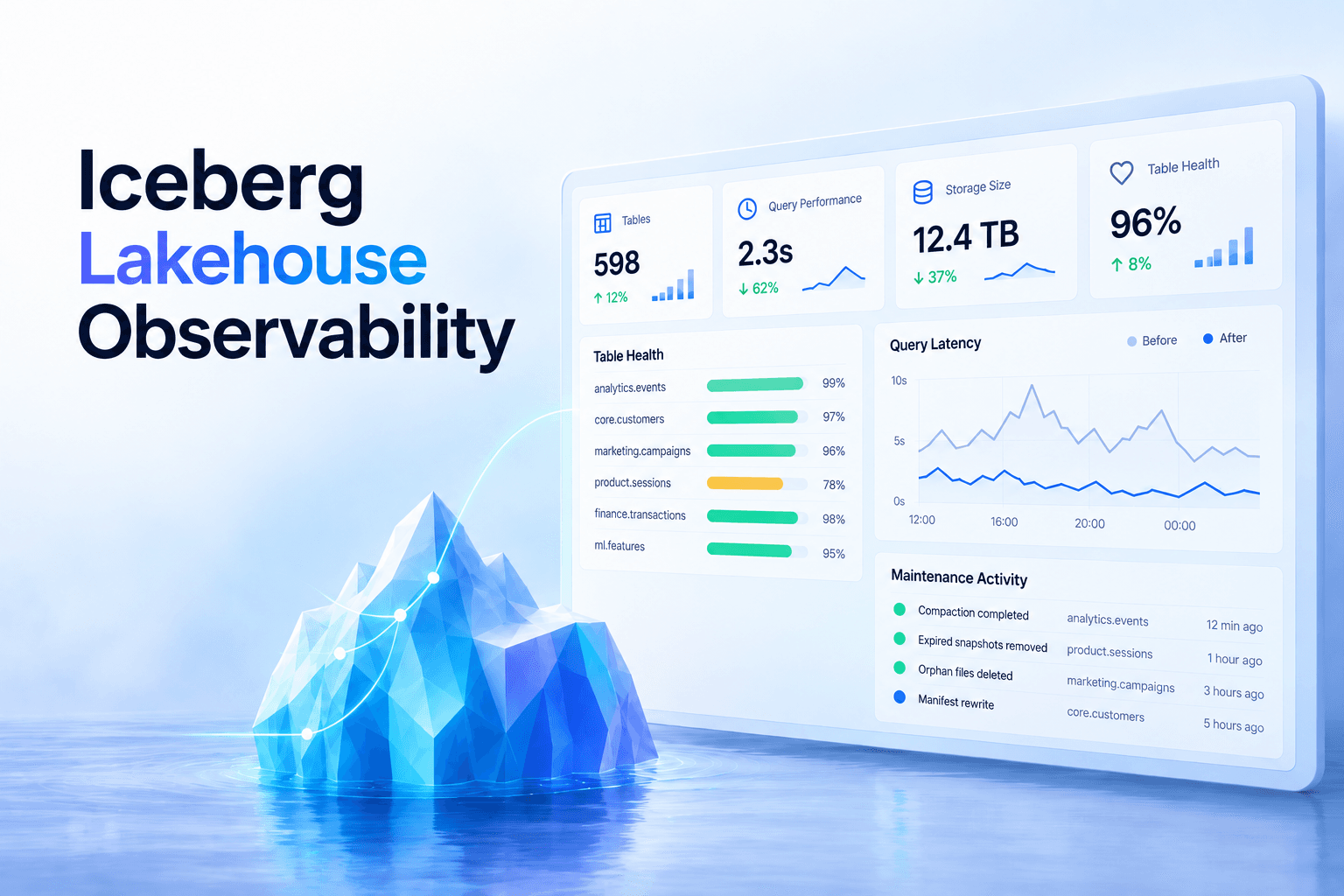
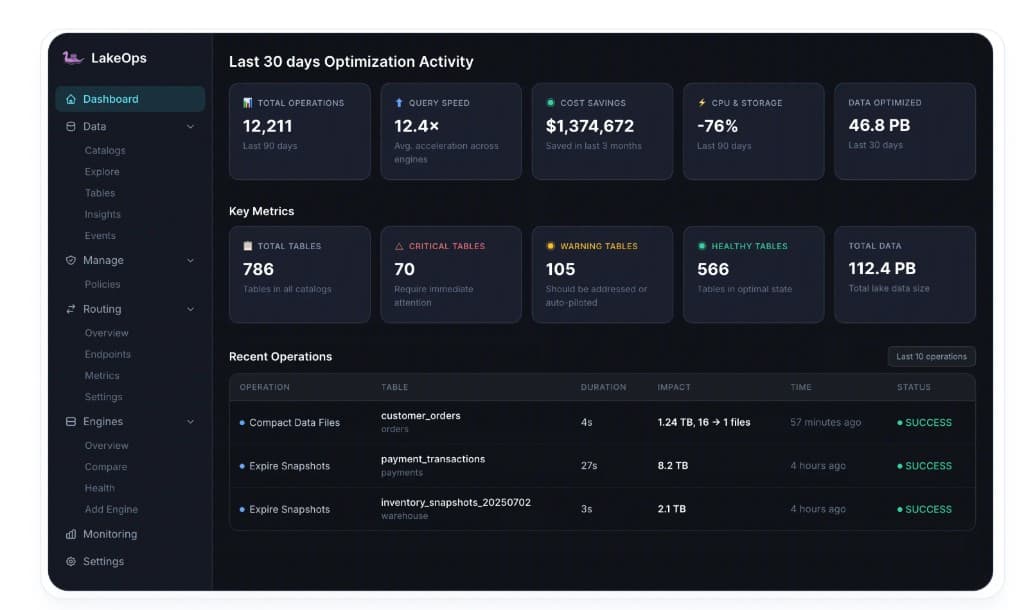
LakeOps dashboard showing optimization activity, key metrics, and recent operations across production Iceberg tables
Apache IcebergLakeOpsFinOpsData Platforms

Managed Iceberg in 2026: Autonomous Data Lake

Iceberg tables degrade silently — small files pile up, snapshots bloat metadata, and query latency creeps higher. A breakdown of the nine components every production data lake needs to stay healthy — starting with observability and telemetry collection, through compaction, snapshot management, and lake-wide policies, to multi-engine routing and agentic AI enablement.

Jonathan Saring
Jonathan Saring
23 min read
Benchmarking Lakeops: A Production-Grade Compaction Engine for Apache IcebergExternal
Apache IcebergLakeOpsData Platforms

Benchmarking Lakeops: A Production-Grade Compaction Engine for Apache Iceberg

How we compacted 4.5 TB across 10 real production tables, achieved up to 99.8% file reduction, and made Apache Spark OOM on a job we finished in 11 minutes.

Amit Gilad
9 min read
Building a Distributed Compaction Engine for Apache Iceberg with Rust + DataFusionExternal
Apache IcebergLakeOpsData Platforms

Building a Distributed Compaction Engine for Apache Iceberg with Rust + DataFusion

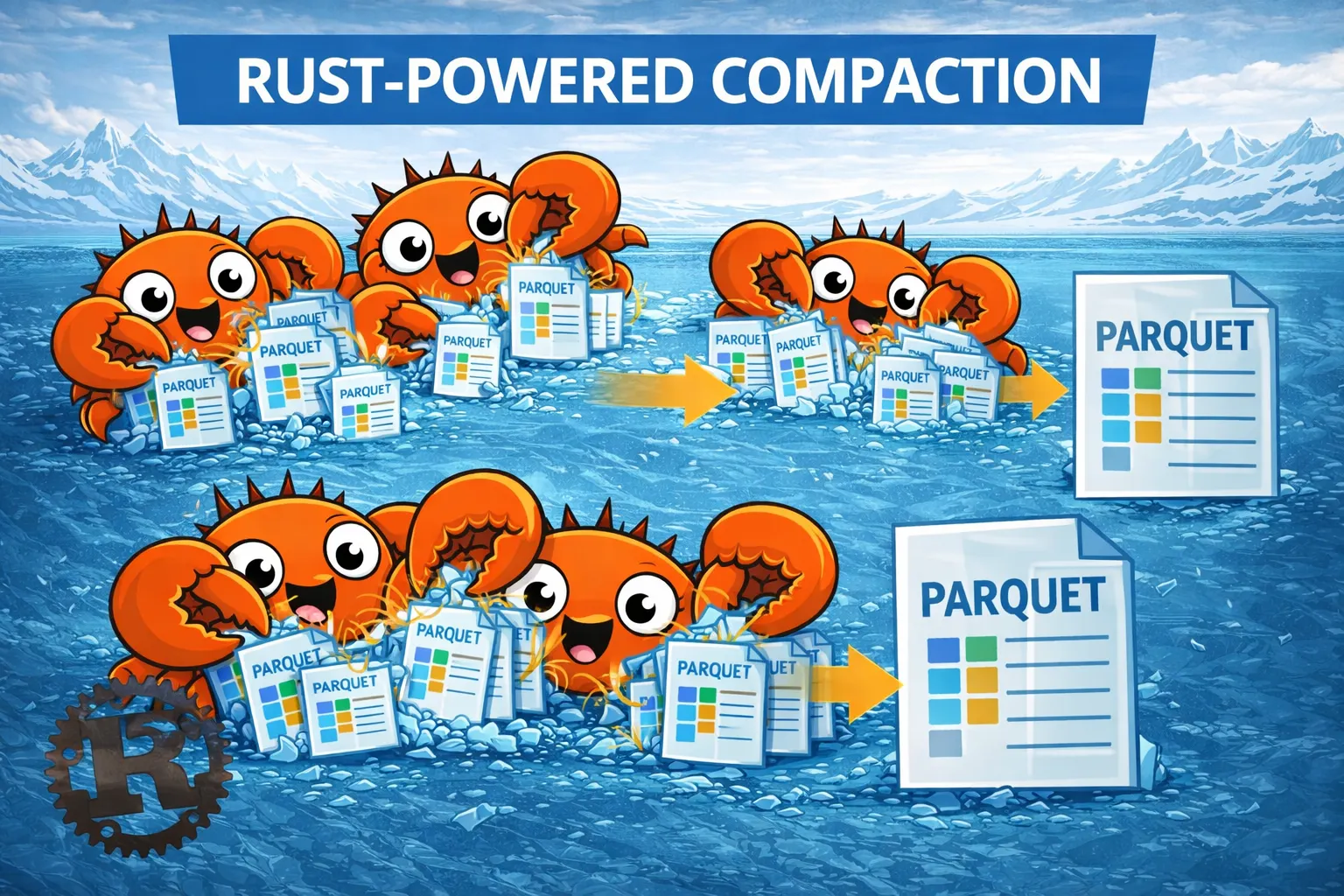
How we built a high-performance, distributed compaction engine for Apache Iceberg using Rust and DataFusion—architecture, design choices, and lessons learned.

Amit Gilad
9 min read
From 350TB to 230TB in 10 Minutes: The Hidden Weight of Stale DataExternal
Apache IcebergData LakeLakeOps

From 350TB to 230TB in 10 Minutes: The Hidden Weight of Stale Data

See how a 350TB data lake shrank to 230TB in 10 minutes by removing stale data—saving 34% in AWS S3 costs and proving the need for a control plane.

Amit Gilad
5 min read
Why Every Data Lake Needs a Control Plane: Lessons from Apache IcebergExternal
Apache IcebergData LakeLakeOps

Why Every Data Lake Needs a Control Plane: Lessons from Apache Iceberg

Apache Iceberg delivers speed, but without a control plane snapshots pile up, costs surge, query take more time — starting with expiration.

Amit Gilad
8 min read