Data LakehouseApache IcebergLakeOps
Data Lakehouse Architecture Guide
A practical guide to building a data lakehouse: object storage, Apache Iceberg, the catalog, the engine fleet, and the control plane that keeps every table fast and cheap.

Iceberg compaction strategies, engines, and automation — binpack, sort, Z-order, streaming compaction, and production benchmarks.
48 articles
A practical guide to building a data lakehouse: object storage, Apache Iceberg, the catalog, the engine fleet, and the control plane that keeps every table fast and cheap.
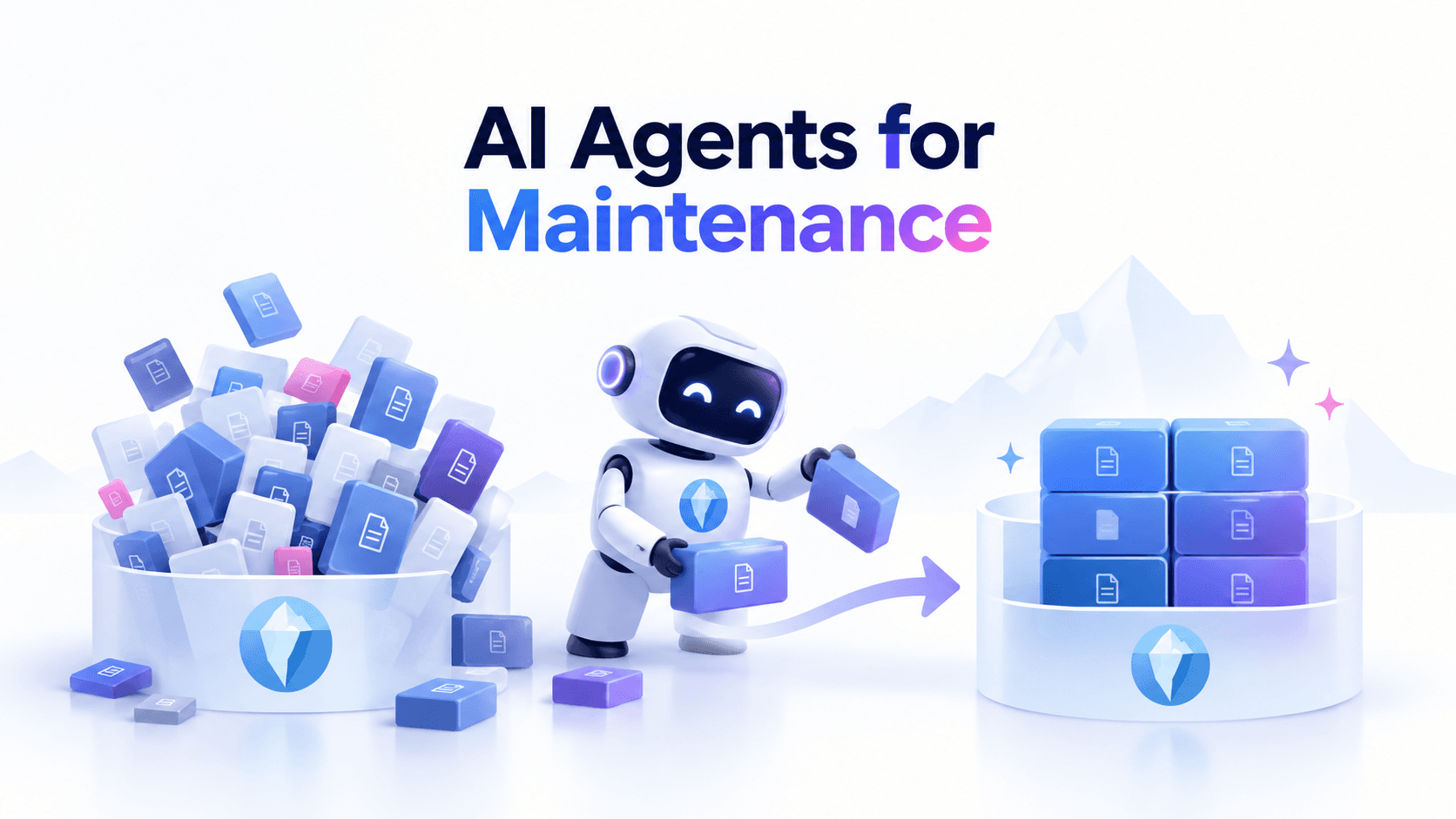
AI agents reason about table health, decide what maintenance each Iceberg table needs, execute operations in the correct sequence, and learn from outcomes. A deep technical guide covering compaction strategies, the Rust/DataFusion engine, and the autonomous maintenance loop.

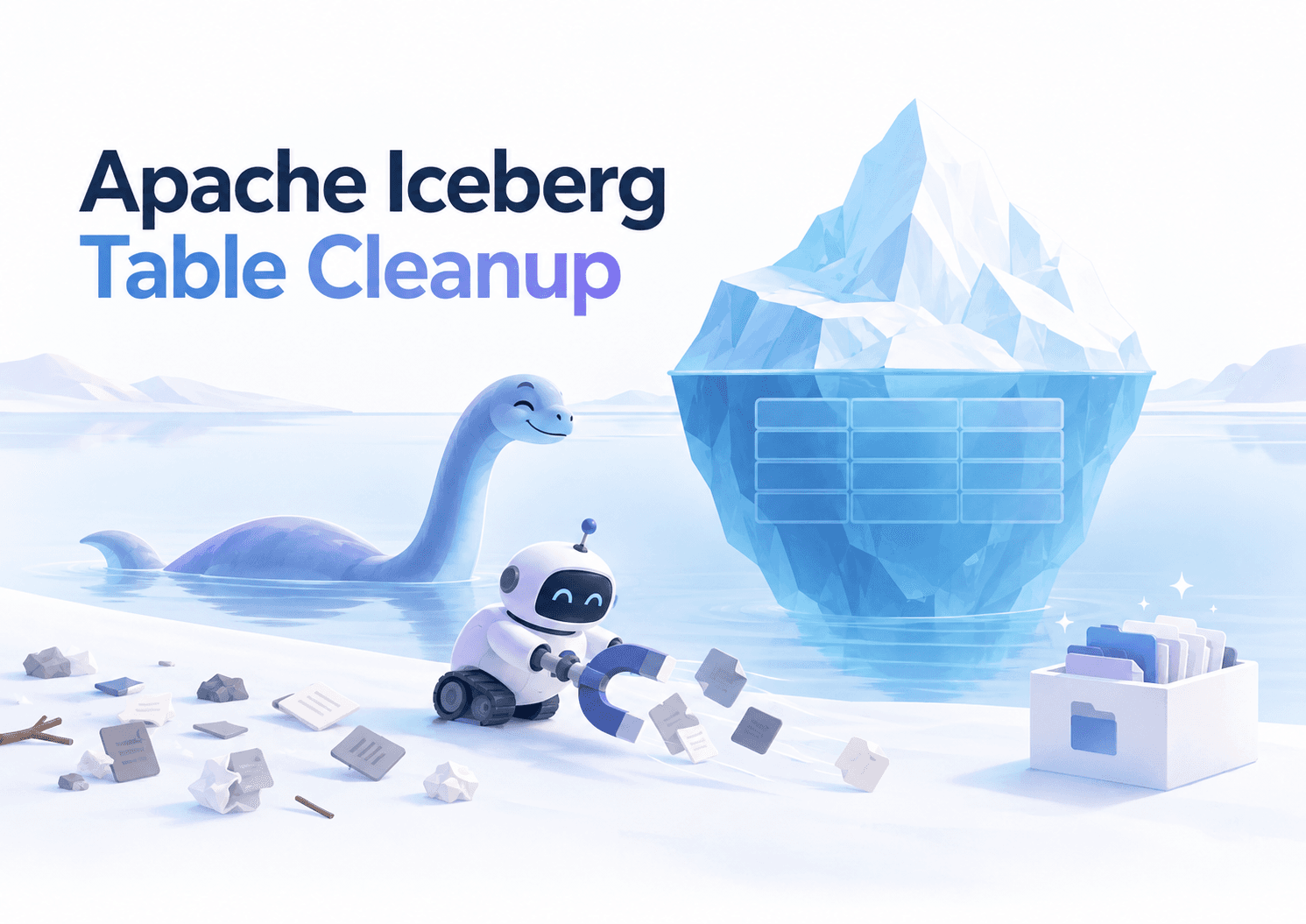
A practitioner's guide to Iceberg table cleanup — snapshot expiration, orphan file removal, manifest rewriting, delete file resolution, streaming challenges, compliance, and cost. Why sequencing matters, where teams break tables, and how to automate the full lifecycle.
The complete guide to Iceberg's rewrite_data_files procedure — strategies, parameter tuning, OOM fixes, commit conflict handling, and when to move beyond manual compaction to an automated control plane.
A practitioner's guide to building Airflow DAGs for Iceberg table maintenance — compaction, snapshot expiration, orphan cleanup, and manifest rewriting with working Spark SQL code. At each step, the guide contrasts the manual DAG approach with the autonomous control plane alternative, showing where the architectural boundary lies and how to migrate when the lakehouse outgrows cron-based maintenance.

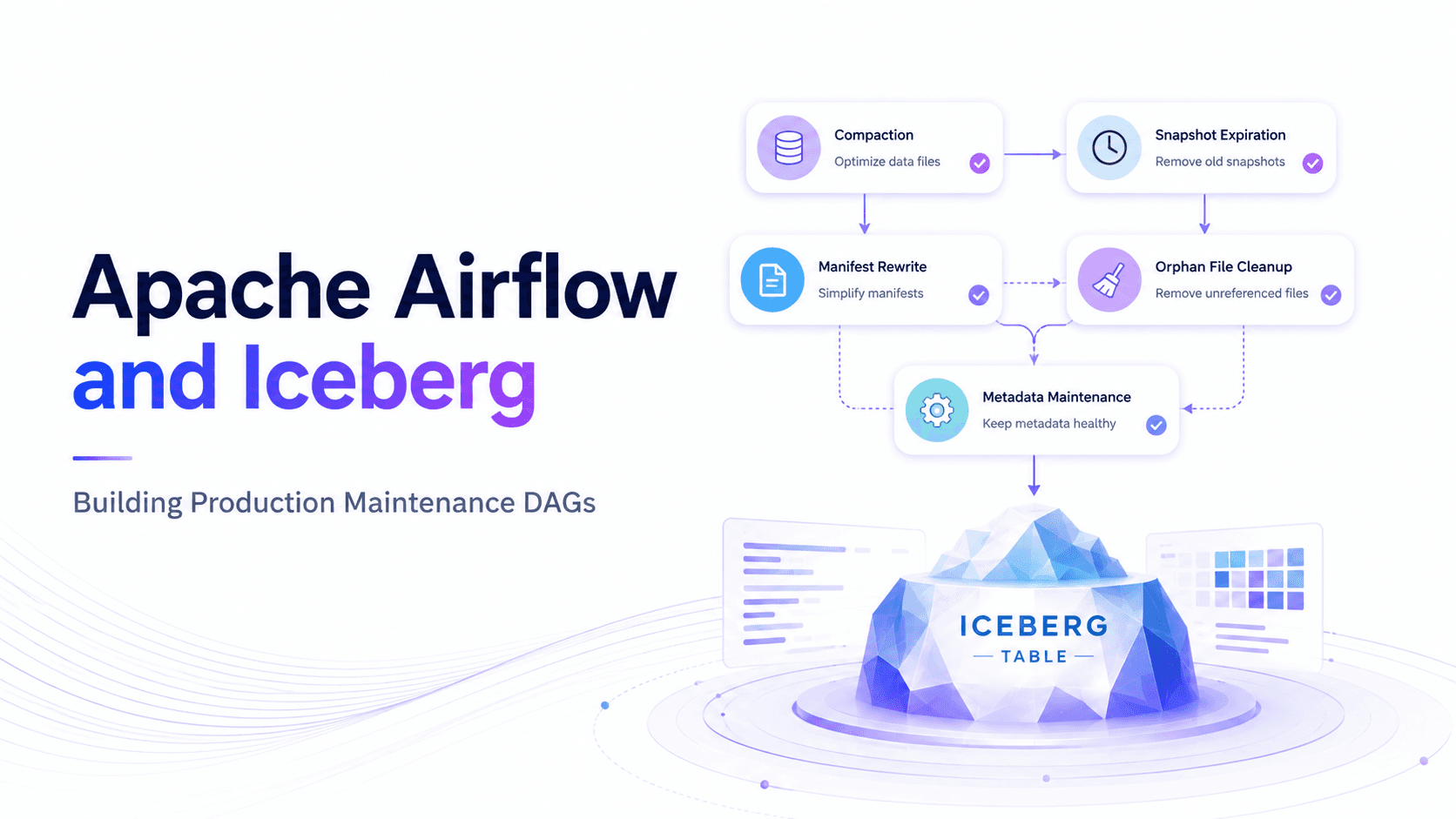
Most data lakehouse teams start maintaining Iceberg tables with Airflow DAGs and Spark SQL procedures. This guide covers the five structural pitfalls that emerge at scale — fixed schedules, per-table DAGs, JVM overhead, missing coordination, and blind-spot observability — and the autonomous control plane architecture that replaces them.
How Apache Iceberg performance actually works — the query execution pipeline, the five surfaces that degrade every production table, and the intelligent control plane that keeps file layout, sort order, metadata, and engine routing optimized continuously.
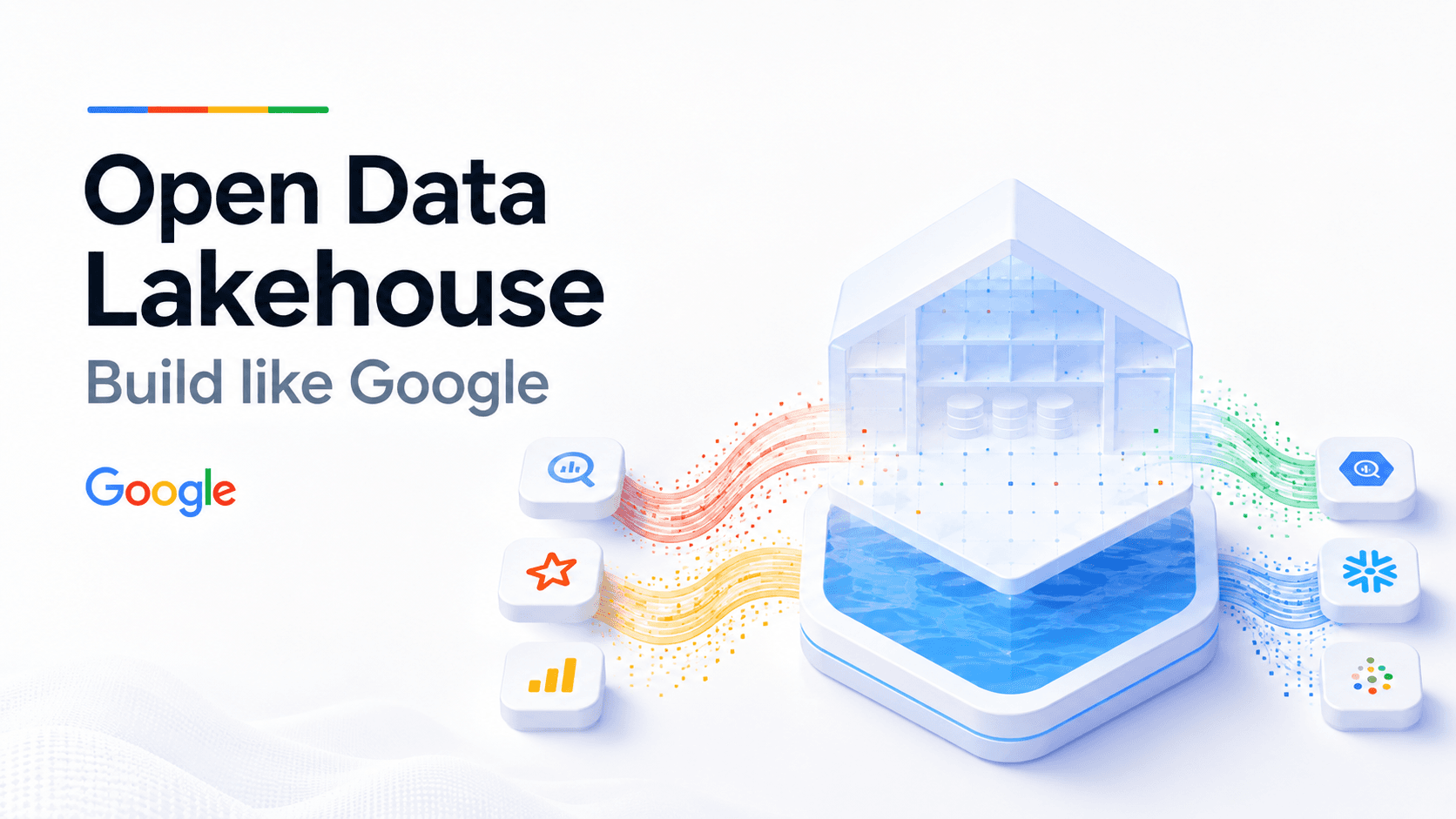
Google engineered a multi-layered Iceberg lakehouse — autonomous storage optimization, vectorized native execution, catalog federation, and credential vending. Learn their 6-layer optimization framework and how to build the same architecture with an open, engine-neutral control plane.
Query and write Apache Iceberg tables with DuckDB — no cluster required. Catalog setup, MERGE INTO, time travel, table layout, and when to route to DuckDB vs Spark or Trino.
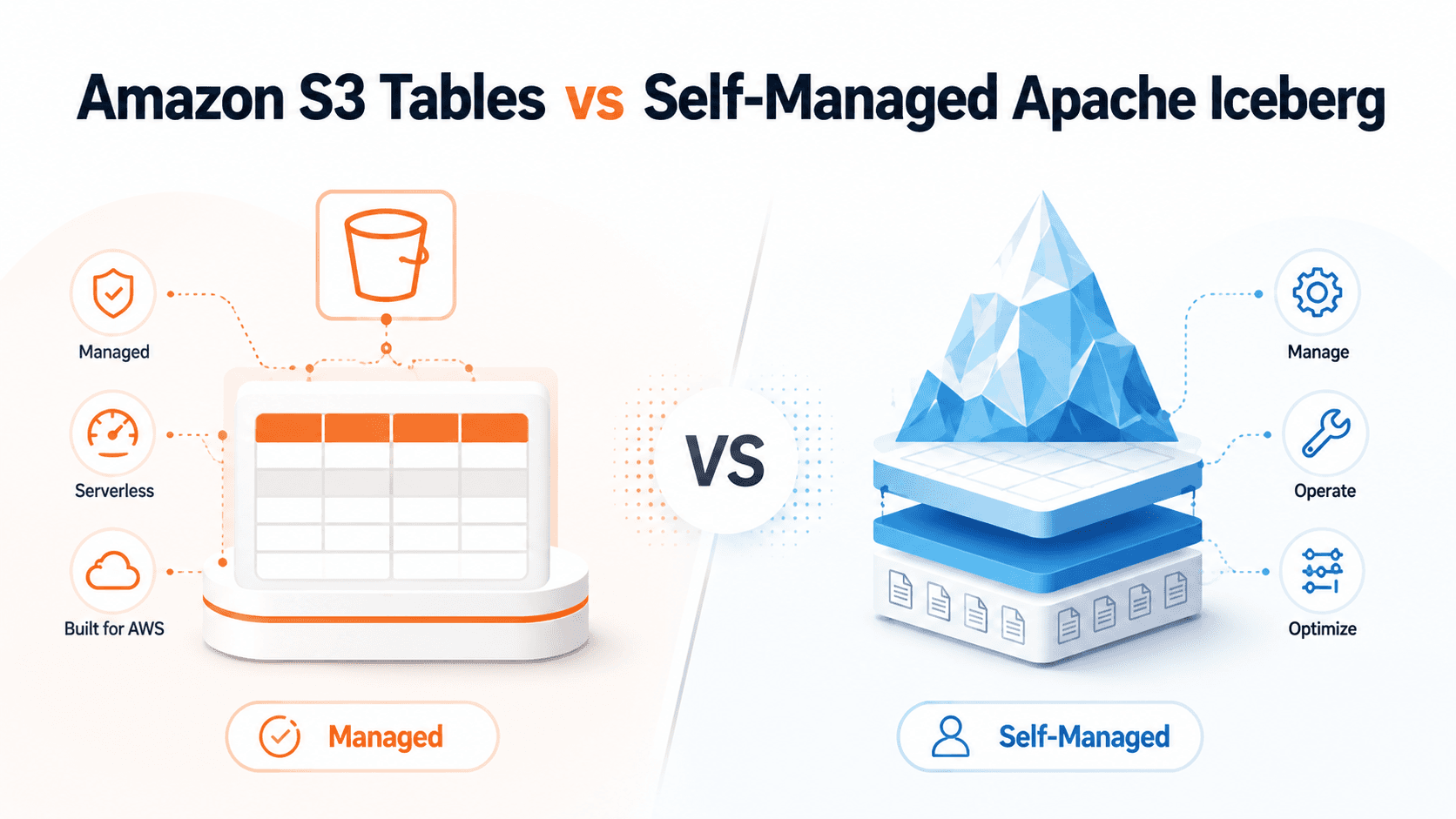
S3 Tables embeds managed Iceberg into S3 with automatic compaction. Self-managed Iceberg gives full control over catalogs, engines, and maintenance. A production comparison across compaction, observability, engine support, security, cost, and the control plane that ties it all together.
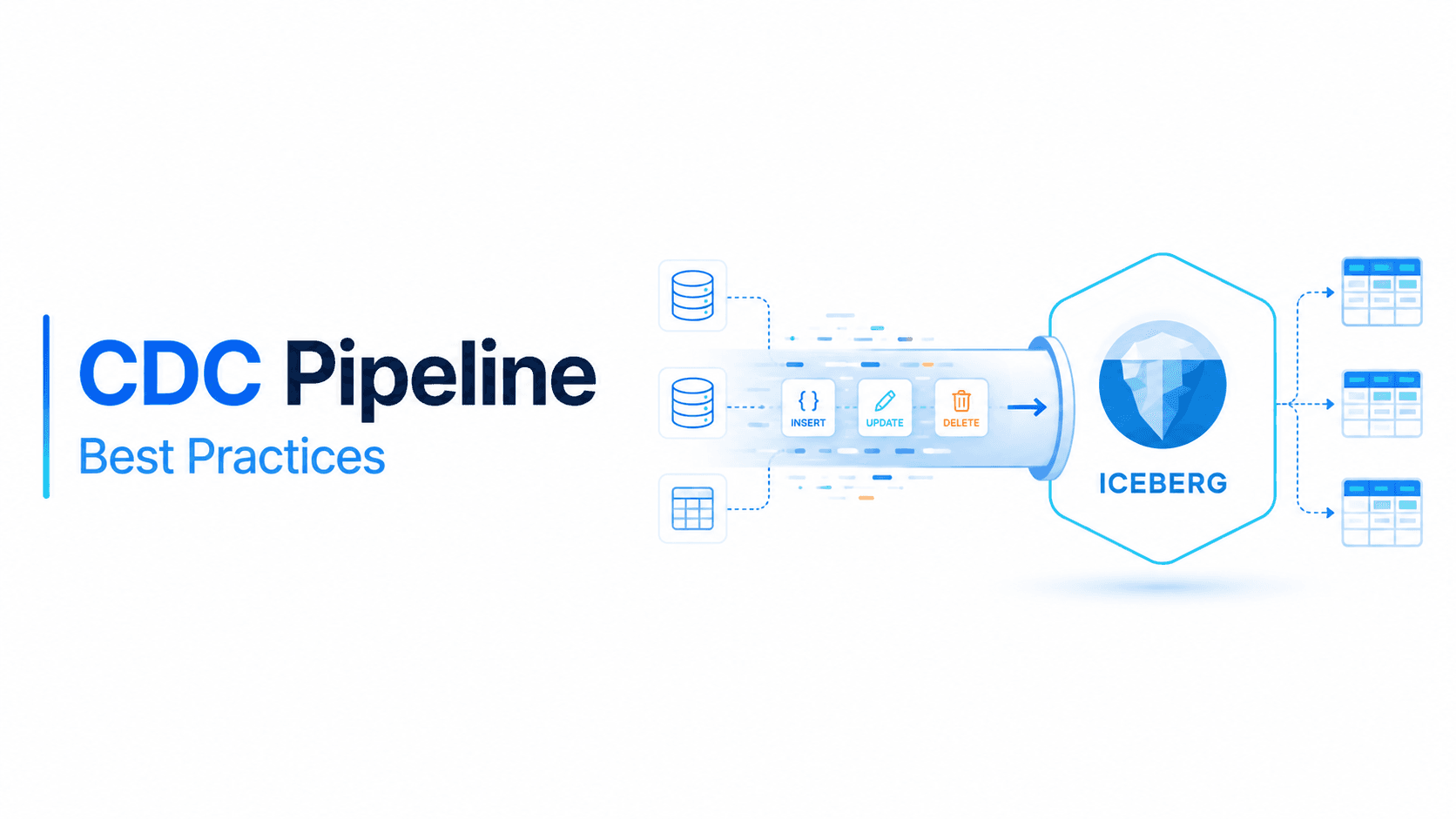
Getting CDC data into Iceberg is solved — Debezium, Flink, and DMS handle ingestion. The hard part is maintaining CDC tables that receive continuous updates and deletes. A practical guide to ingestion patterns, delete file management, and autonomous maintenance.

Slow Iceberg queries almost always trace back to five structural problems: small files, wrong sort order, manifest bloat, stale snapshots, or partition misalignment. This diagnostic guide shows you how to find each one, confirm it with SQL, and fix it — manually or with autonomous optimization.
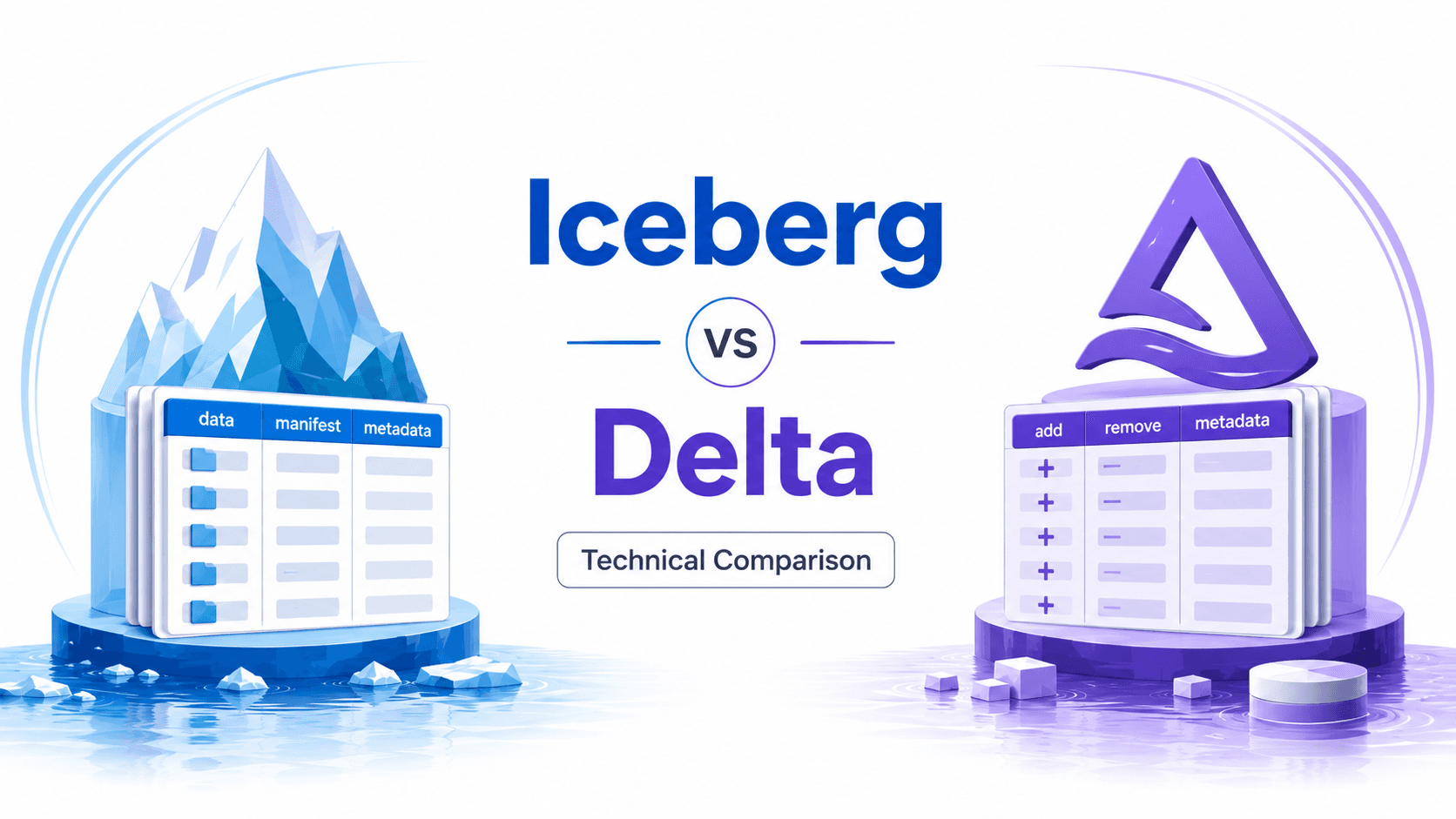
A deep technical comparison of Apache Iceberg and Delta Lake across metadata, schema evolution, partitioning, engine support, and operations — and how a control plane closes Iceberg's operational gap.
Athena charges $5 per TB scanned — and on poorly maintained Iceberg tables, every query scans far more data than it should. This guide breaks down why Athena bills explode on Iceberg (small files, bad sort order, stale manifests, scan amplification) and presents two paths to fix it: autonomous optimization with LakeOps or the manual approach with Athena SQL and Spark.
Spark compaction is expensive, slow, and architecturally wrong for file rewrites. Here's how to replace it with purpose-built engines that cost 90% less and finish 95% faster — plus the DIY path if you want to optimize what you already have.

Slow Trino queries on Apache Iceberg are rarely a compute problem — they're a table layout problem. Unmaintained Iceberg tables turn sub-second Trino scans into minute-long full reads. This guide covers seven proven fixes for faster Trino Iceberg performance: compaction, query-aware sorting, partition strategy, manifest optimization, lifecycle cleanup, multi-engine routing, and continuous observability. Why Trino-native maintenance falls short — and how to automate each fix at scale.

A deep guide to bin-pack, sort, and Z-order compaction strategies for Apache Iceberg — when to use each, how to configure them, and how to automate strategy selection across hundreds of tables.

How STACKIT built a managed lakehouse offering on Kubernetes — custom operators, CRD-driven provisioning, multi-tenant Iceberg catalogs, and the engineering lessons from bringing a sovereign lakehouse service to market in Europe.

Running Iceberg at 10 tables is configuration. Running it at 10,000 is infrastructure. Production lessons on infrastructure evolution, Parquet tuning, Spark configuration, catalog scaling, enterprise security, and observability-driven optimization for production Iceberg deployments.

How to migrate Delta Lake tables to Apache Iceberg without copying or rewriting data files. Covers zero-copy metadata conversion, the mapping between Delta transaction logs and Iceberg manifest trees, Iceberg V3 spec compatibility, practical tooling (XTable, UniForm, Iceberg Delta module), and the post-migration operational discipline — compaction, sort optimization, statistics — that determines whether converted tables actually perform.

LinkedIn runs Iceberg CDC on 10,000+ tables — billions of upserts daily, 2+ PB throughput. Equality vs position deletes, delete-file compaction, budgeted maintenance, and WAP branching lessons for any team running MERGE INTO at scale.

When Iceberg metadata grows to hundreds of gigabytes, query planning — not Parquet reads — becomes the bottleneck. A practical guide for data platform teams on manifest rewriting, snapshot expiration, statistics, and metadata health at petabyte scale.

Every concurrent write to an Apache Iceberg table risks a commit conflict. This guide covers how Iceberg's optimistic concurrency works, what triggers CommitFailedException, the common conflict scenarios in streaming and maintenance workloads, and the strategies — from partition isolation to branch-based writes — that eliminate conflicts in production.

A production-ready runbook for Iceberg incidents: queries suddenly slow, planning takes minutes, write conflicts spike, storage grows uncontrolled, compaction OOMs, time travel breaks, and delete files degrade reads. Each incident follows Symptom → Root Cause → Diagnosis → Fix → Prevention.

Apache Iceberg ships the maintenance primitives — compaction, snapshot expiration, orphan cleanup, and manifest rewriting — but none of them run themselves. This guide covers why each operation matters, the correct execution order, the limitations of scripts and cron jobs, and how to automate the full lifecycle with policies, observability, and a purpose-built control plane.

Streaming from Kafka into Apache Iceberg creates small files faster than any other write pattern. This guide covers why standard compaction approaches fail for streaming tables, how to measure compaction need, implement partition-aware compaction that avoids writer conflicts, tune rewriteDataFiles parameters, and run maintenance autonomously at scale.

Apache Iceberg 1.11.0 lands V3 maturity with production-ready deletion vectors, a native Variant type for semi-structured data, server-side scan planning, built-in table encryption, and a pluggable File Format API that opens the door to next-generation storage formats.

AWS Glue provides native Iceberg support for cataloging, ETL, and built-in table maintenance — but production lakehouses hit limitations fast. This guide covers Glue catalog configuration, ETL best practices, compaction tuning, common pitfalls, and how a dedicated control plane fills the operational gaps.

dbt transforms your data — but who maintains the Iceberg tables underneath? A practical guide to dbt adapters, incremental strategies, table properties, and the maintenance gap that every dbt + Iceberg team hits in production.

Flink streaming into Iceberg creates thousands of small files per hour. This guide covers checkpoint tuning, write distribution modes, Flink SQL patterns, and why external maintenance is essential for production streaming tables.

Delete files let Iceberg avoid rewriting data on every UPDATE or DELETE — but every unresolved delete file forces readers to reconcile at query time. A deep guide to position deletes, equality deletes, measuring overhead, and resolving accumulation before it tanks performance.

Partitioning determines how much data every query must scan. Apache Iceberg's hidden partitioning and partition evolution change the game — but choosing the wrong strategy still creates performance cliffs. A practical guide to transforms, sizing, evolution, and avoiding the small-files trap.

Small files silently degrade every Apache Iceberg lakehouse — inflating S3 costs, slowing query planning, and bloating metadata. This guide covers root causes, measurement, manual and automated fixes, and how to eliminate the problem at scale.

Iceberg tables degrade silently in production — small files multiply, snapshots accumulate, orphans waste storage, and manifests fragment. A comprehensive guide to the five maintenance operations, why sequencing matters, the metrics that reveal problems early, and how to automate the full lifecycle.

A practical guide to optimizing Apache Iceberg queries and table maintenance with Trino — covering scan planning, predicate pushdown, file pruning, Trino-side tuning, maintenance procedures, physical layout optimization, and how a dedicated control plane eliminates JVM overhead while adding cross-engine intelligence.

State of Iceberg FinOps in 2026: where lakehouse spend leaks, what to measure, how autonomous management and optimization are replacing manual maintenance — and a practical survey of tools from cloud optimizers to control planes.

Eight optimization layers for data platform engineers running BI, ad-hoc SQL, and aggregation pipelines on Apache Iceberg — from partition design and file sizing through compaction, routing, and continuous maintenance.

Iceberg lakehouses silently accumulate cost from small files, dead snapshots, orphan data, unoptimized layouts, and over-provisioned compute. Seven practical strategies — from deploying an autonomous control plane to leveraging partition evolution — that production data teams use to cut lakehouse spend by up to 80%.

Iceberg tables degrade silently — small files from streaming, unsorted data, fragmented manifests, accumulated delete files. Each one caps query speed regardless of engine. Six concrete optimization layers, how they interact, and how autonomous maintenance keeps every table at peak performance.

Compaction keeps Apache Iceberg lakehouses fast and lean — but every tool approaches it differently. A side-by-side look at nine production options: LakeOps, AWS Glue, Amazon S3 Tables, Snowflake, Google BigLake, Cloudera, Starburst, Dremio, and Databricks.

A practical walkthrough of optimizing an Apache Iceberg lakehouse end to end — from connecting catalogs and diagnosing table health through autonomous compaction, lifecycle management, and multi-engine routing to measurable cost and performance outcomes.

Compaction is the most impactful operation in an Apache Iceberg lakehouse — and the hardest to get right at scale. File merging is the easy part. Knowing when to trigger it, what sort strategy to apply per table, how to avoid conflicting with other maintenance, and how to do it without spinning up expensive JVM clusters — that is the real problem. A breakdown of what modern compaction actually requires.
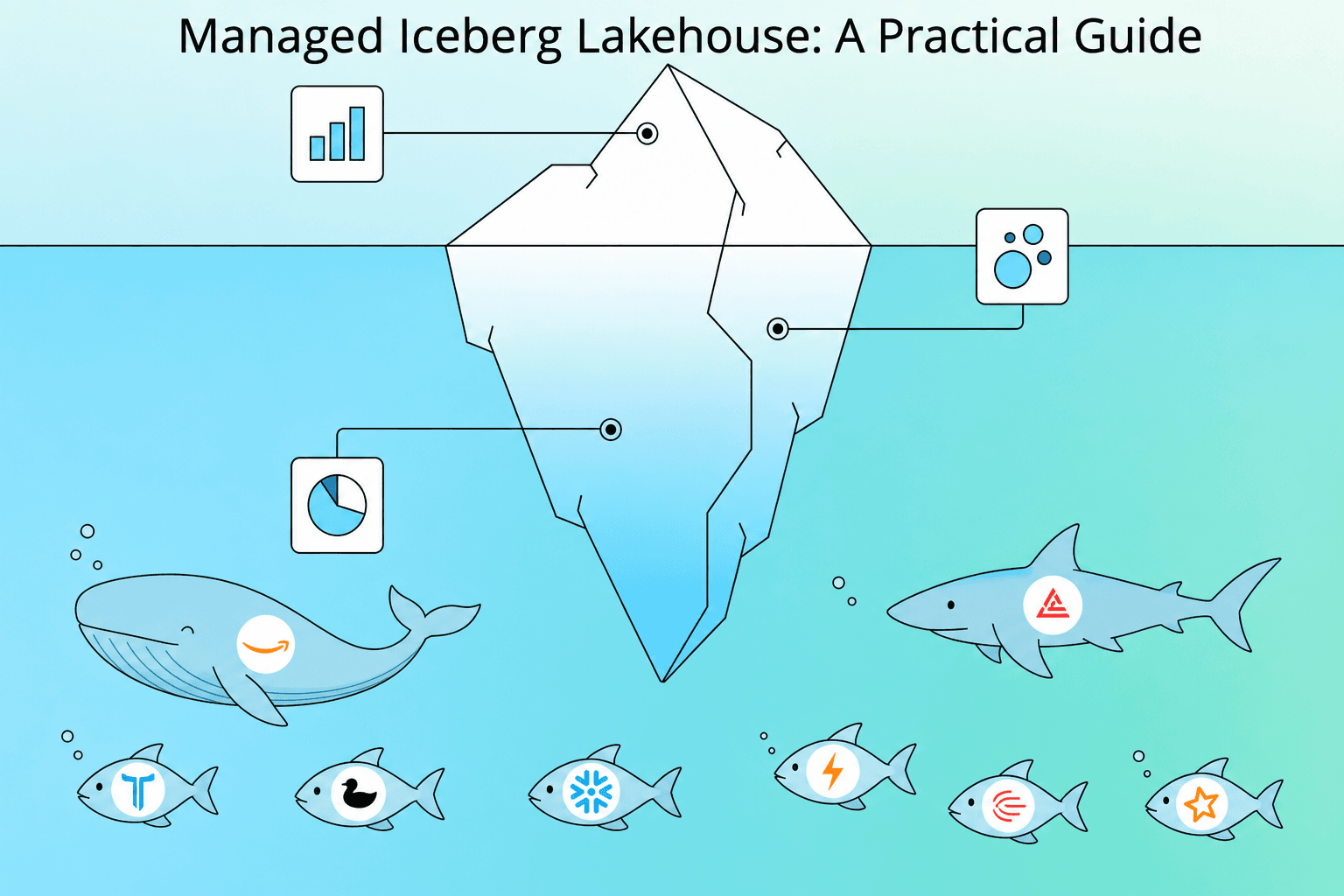
Apache Iceberg gives your lakehouse warehouse-grade reliability on object storage — but the format does not optimize itself. A practical guide to every operational pillar a production Iceberg lakehouse needs — from lake-wide observability and query-aware compaction to snapshot lifecycle, metadata health, and governance — and how LakeOps runs it all from a single control plane.

Iceberg tables need continuous maintenance — compaction, snapshot expiration, manifest optimization, and orphan cleanup — but manual scripts break at scale. A deep look at what autonomous table maintenance means in practice: how telemetry-driven orchestration replaces reactive firefighting and keeps every table healthy without human intervention.
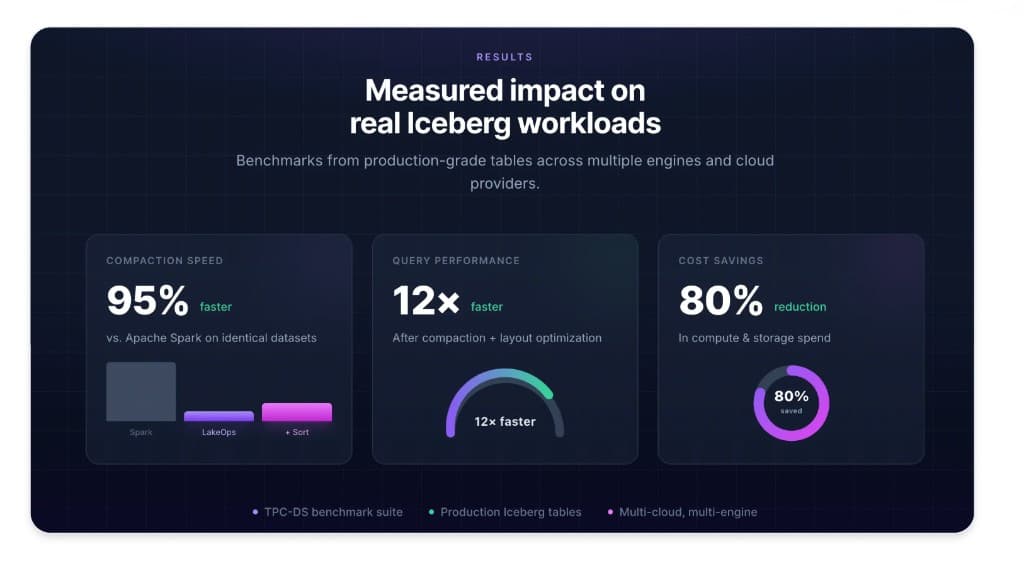
Your Iceberg lake is overcharging you from four directions at once — storage bloat, query compute waste, compaction overhead, and engineering time. This post breaks down exactly where each dollar goes and how autonomous table management eliminates the waste without touching your pipelines.

How we compacted 4.5 TB across 10 real production tables, achieved up to 99.8% file reduction, and made Apache Spark OOM on a job we finished in 11 minutes.

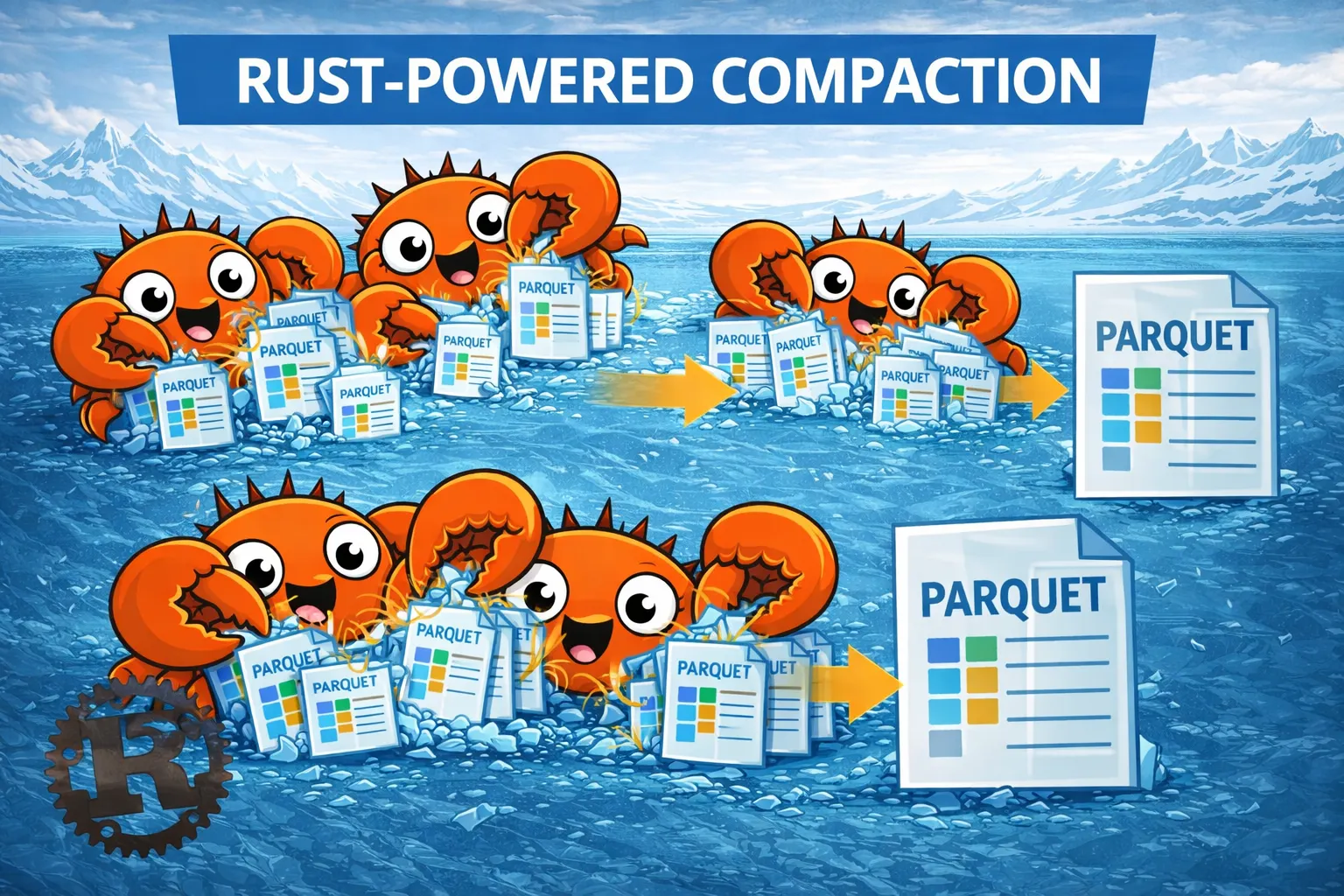
How we built a high-performance, distributed compaction engine for Apache Iceberg using Rust and DataFusion—architecture, design choices, and lessons learned.
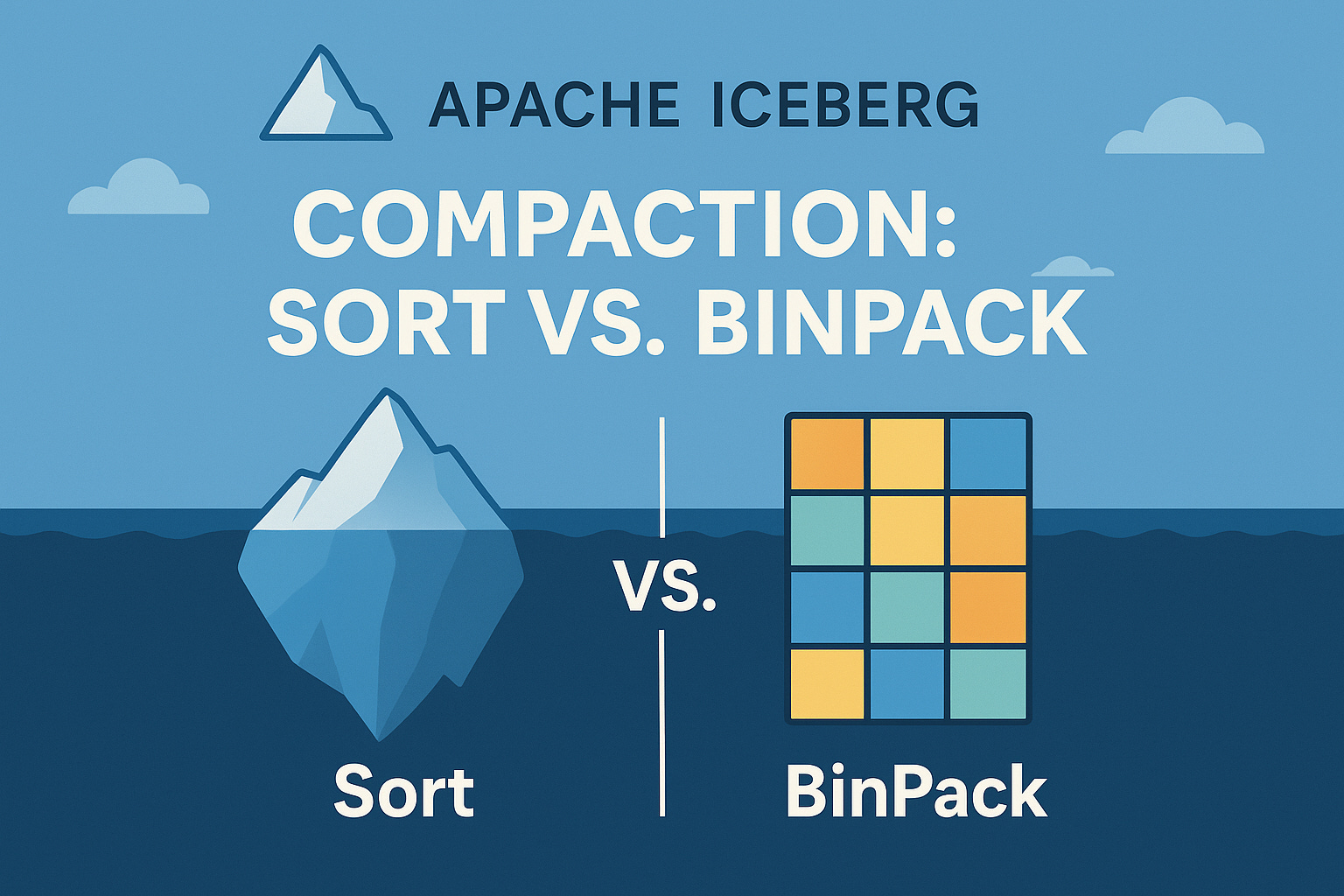
Unlocking performance vs. optimizing storage — choosing the right compaction strategy for your data lake.