Building the control plane for the modern lakehouse
LakeOps is where your data meets AI: Iceberg tables that stay healthy, fast, and lean on their own, and AI agents that query and operate them safely, without copying your data.
Apache Iceberg gave data teams an open table format that every engine can read, on storage they own. It didn't make the tables look after themselves.
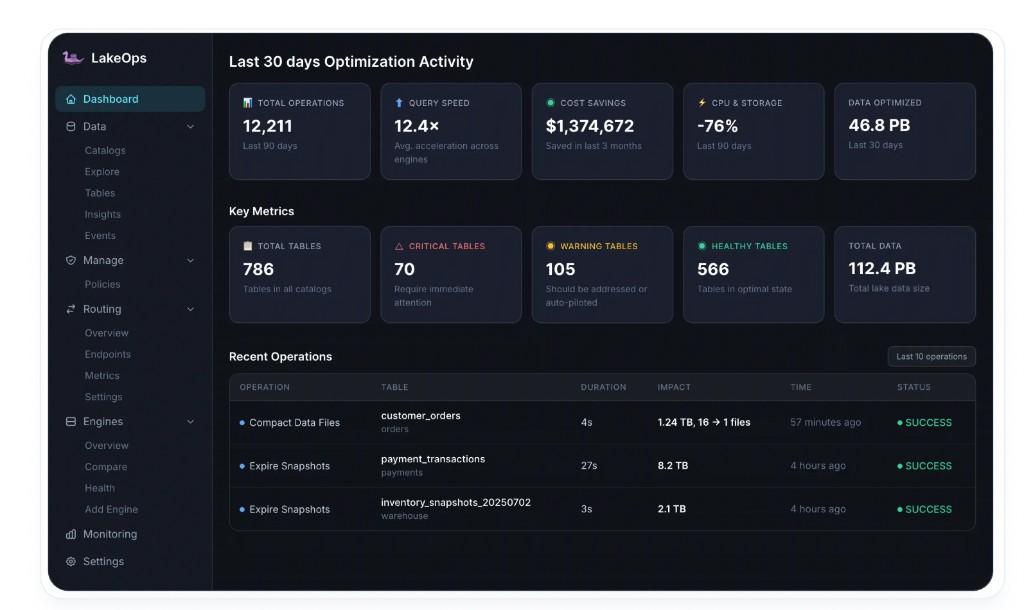
Every table needs steady upkeep: small files compacted, old snapshots expired, orphan files removed, and manifests rewritten. Most teams run it with Spark jobs and cron schedules tuned by hand, table by table. Companies like Netflix built internal platforms to automate it, and it took them years.
We started LakeOps to give every team that layer from day one: a control plane that reads Iceberg metadata, decides what each table needs, and runs the work in place, without moving your data.
Our mission
Make every Iceberg lakehouse self-running and ready for AI agents, so data teams build with their data instead of babysitting tables.
Maintenance that runs when each table needs it
Safe, governed access for AI agents
Your data stays in your storage
Where data meets AI
Then AI agents came to the lake.
AI agents are fast becoming the lakehouse's busiest users. They write their own SQL, run it all day, and need fresh, fast tables and only the data they're allowed to see.
Teams want agents to help run the lake, too, without handing them the keys to everything. So LakeOps became the layer where your data meets AI, in three parts.