Back to all articles

Data Governance articles

Data governance, compliance, and policy enforcement — GDPR, access control, lineage, and catalog management.

15 articles

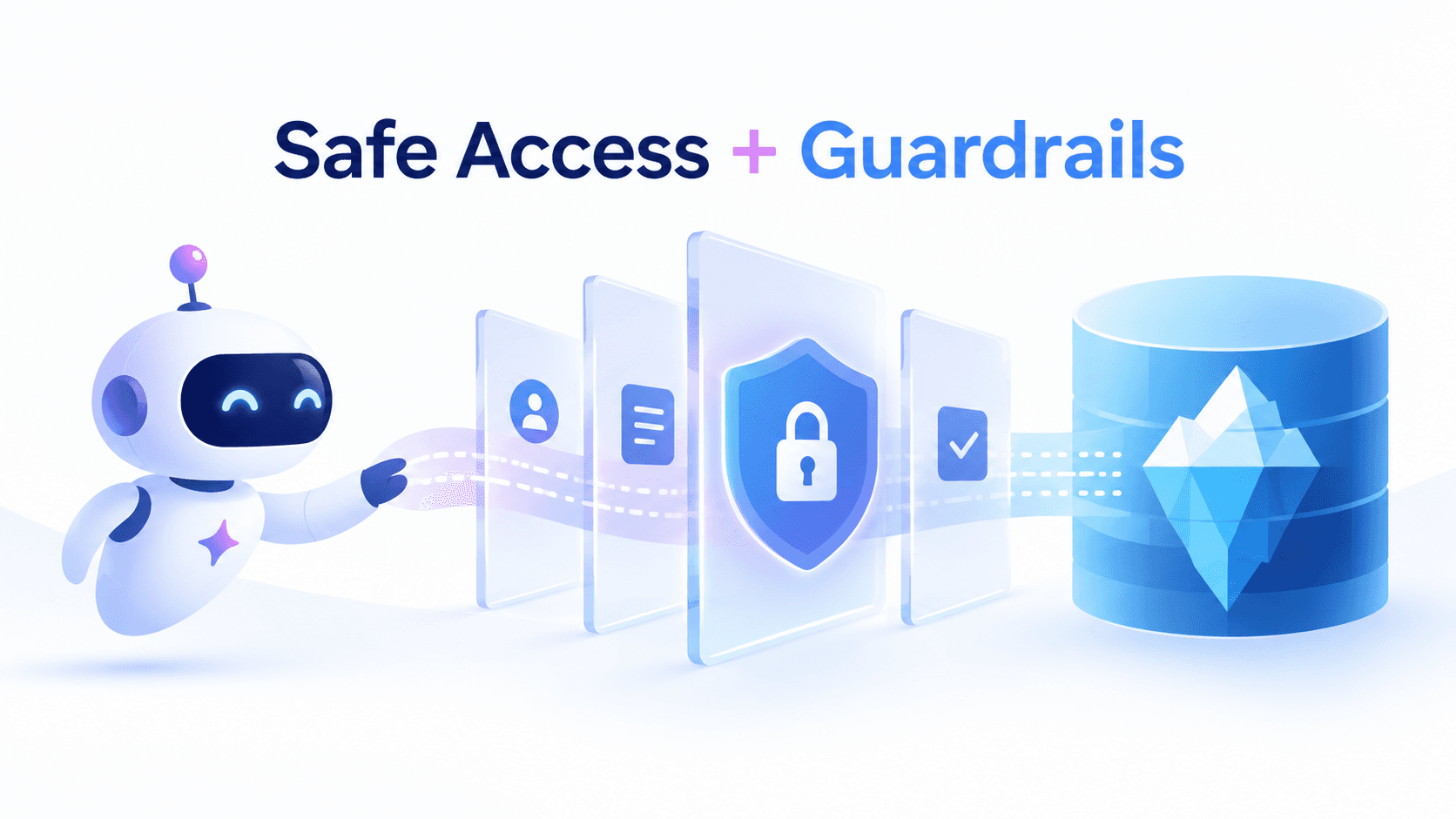
How to Give AI Agents Safe Access to Apache Iceberg Data in Production
AIApache IcebergLakeOps

Safe AI Agent Access to Apache Iceberg in Production

AI agents querying production Iceberg tables can scan petabytes, leak PII, or drop tables — all without human review. This guide covers the guardrails, governance policies, and control plane architecture needed to give agents safe, governed access.

Chris P
Chris P
22 min read
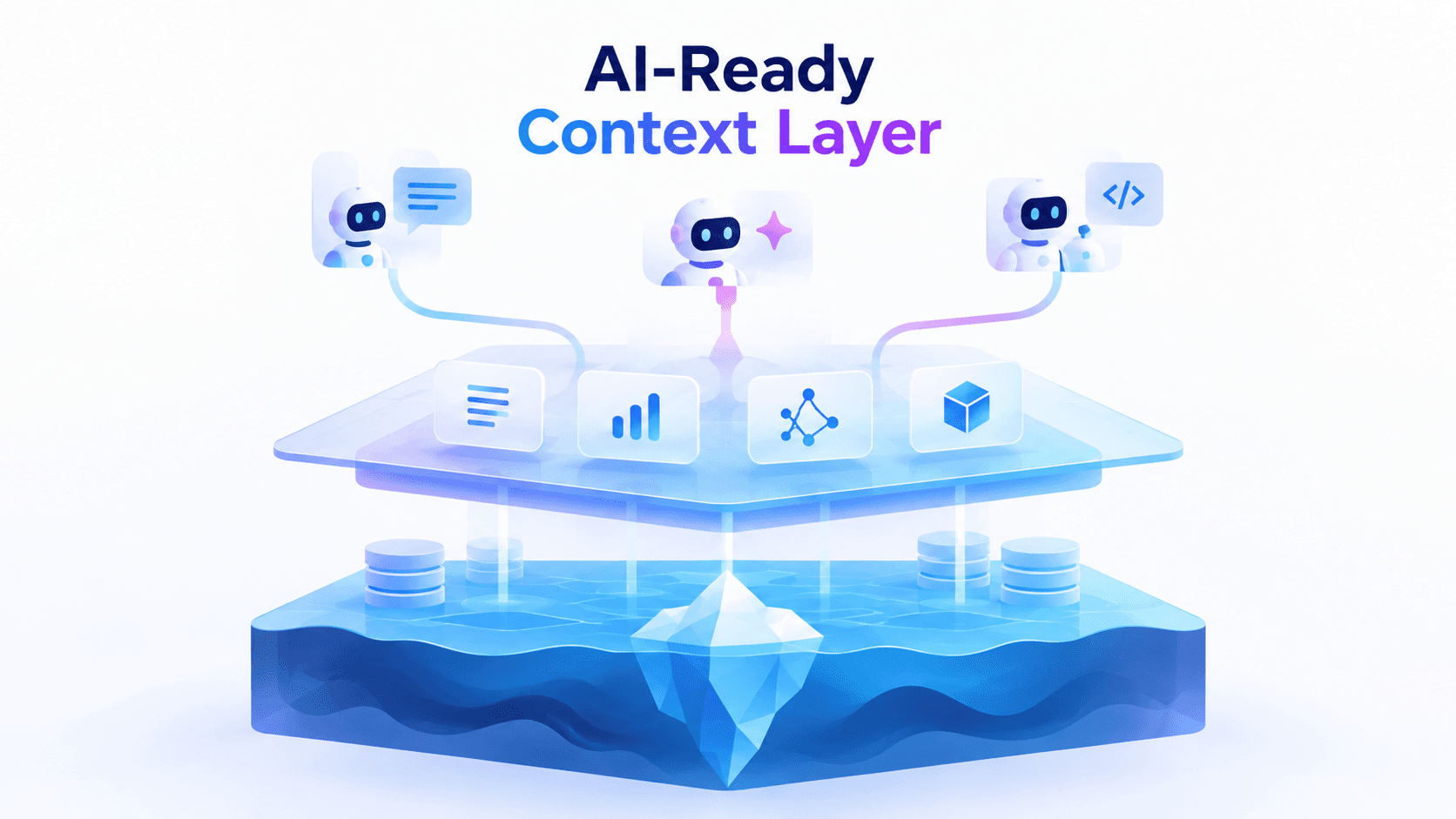
Apache Iceberg for AI Agents: How to Make Your Lakehouse Data AI-Ready
AIApache IcebergLakeOps

Apache Iceberg for AI Agents: Make Your Lakehouse AI-Ready

The definitive guide to making your Apache Iceberg lakehouse AI-ready across six dimensions: discoverable, queryable, governed, observable, maintainable, and connected. Includes a practical readiness checklist and scoring framework.

David W
David W
30 min read
Data lake and data lakehouse governance — policies, observability, maintenance, audit trails, and multi-engine control across data zones
Apache IcebergData LakehouseData Governance

Data Lake and Data Lakehouse Governance: A Complete Guide

Data lakes without governance become data swamps — ungoverned, unobservable, and untrustworthy. This guide breaks down every pillar of production-grade lakehouse governance — policies, autonomous maintenance, observability, audit trails, lifecycle management, multi-engine control, cost governance, and AI guardrails — and shows how LakeOps delivers each as a unified control plane for Apache Iceberg.

Jonathan Saring
Jonathan Saring
22 min read
Zero-trust data architecture for AI workloads on Apache Iceberg and S3
Data PlatformsApache IcebergData Governance

Zero-Trust Data Architecture for AI Workloads on Apache Iceberg and S3

AI workloads running against Iceberg tables on S3 need more than fast queries — they need provably secure, least-privilege access to every byte they touch. This article walks through a zero-trust data architecture built on vended credentials, the Iceberg REST catalog, and Kubernetes-native orchestration — replacing static keys with short-lived, table-scoped tokens enforced at the storage layer.

Rob M
Rob M
32 min read
Iceberg for AI agents — turning lakehouse data into AI-ready context with structured RAG
Data PlatformsApache IcebergAI

Iceberg for AI Agents: Turning Lakehouse Data Into AI-Ready Context

AI agents fail in production because they are overwhelmed with data but starved for context. The bottleneck is not the model — it is the data stack. Apache Iceberg turns lakehouse storage into a live, versioned context layer that powers structured RAG, schema-aware agents, and governed reasoning grounded in truth.

Jonathan Saring
Jonathan Saring
26 min read
Apache Iceberg lakehouse governance — separation of concerns with Polaris and policy engines
Apache IcebergData GovernanceLakehouse

Apache Iceberg Lakehouse Governance: Separation of Concerns with Polaris and Policy Engines

Iceberg deliberately avoids embedding governance into its table format — access control, classification, and policy enforcement belong in the catalog and policy engine layers. This article lays out the three-layer model: table format for data portability, catalog control plane for enforcement, and pluggable policy engines for rules. How Polaris, OPA, and Ranger fit together in production multi-engine lakehouses.

Chris P
Chris P
26 min read
Apache Iceberg V3 for streaming — row-level lineage, schema evolution, and governance
Apache IcebergStreamingData Governance

Apache Iceberg V3 for Streaming: Row-Level Lineage, Schema Evolution, and Governance

Iceberg V3 brings row-level lineage, default column values, and deletion vectors — the features streaming pipelines need for governance without downtime. How V3 changes the streaming governance story on Flink, Kafka, and CDC sources.

Rob M
Rob M
27 min read
Multi-table transactions in Apache Iceberg — cross-table atomicity for the open lakehouse
Apache IcebergLakeOpsData Governance

Iceberg Multi-Table Transactions: Cross-Table Atomicity for Production Lakehouses

Star schema ETL and multi-table CDC need atomic commits across Iceberg tables — not just single-table ACID. How the REST Catalog transaction API, Polaris, Nessie, and Gravitino enable cross-table atomicity, and what teams run in production today.

Chris P
Chris P
16 min read
Apache Iceberg Schema Evolution in Production — best practices and pitfalls across the lakehouse architecture
Apache IcebergData GovernanceLakeOps

Apache Iceberg Schema Evolution in Production: Best Practices and Pitfalls

Schema evolution is one of Iceberg's most powerful features — but misusing it in production causes silent downstream failures, broken statistics, and multi-engine inconsistencies. A practical guide to safe schema changes, column ID mechanics, partition evolution, branch-based testing, rollback strategies, and monitoring schema drift across the lakehouse.

Rob M
Rob M
28 min read
Apache Iceberg Catalog Migration — Hive Metastore to REST, Polaris, Glue, or Nessie
Apache IcebergData PlatformsLakeOps

Apache Iceberg Catalog Migration: Hive Metastore to REST, Polaris, Glue, or Nessie

A practical guide for migrating Apache Iceberg catalogs — from Hive Metastore to REST (Polaris, Gravitino), AWS Glue, Nessie, or Unity Catalog. Covers in-place metadata registration, dual-catalog access, validation, rollback strategies, and multi-catalog federation with LakeOps.

Chris P
Chris P
30 min read
Apache Iceberg Production Readiness Checklist for Enterprise Data Lakes — security, storage, operations, and governance
Apache IcebergData LakehouseLakeOps

Apache Iceberg Production Readiness Checklist for Enterprise Data Lakes

Taking Apache Iceberg from proof-of-concept to enterprise production requires decisions across ten operational dimensions — catalog architecture, table design, write path tuning, maintenance automation, observability, multi-engine coordination, security, disaster recovery, cost management, and on-call readiness. This checklist covers each one with concrete configurations, SQL examples, and the automation patterns that keep large-scale lakehouses healthy.

Rob M
Rob M
25 min read
Iceberg Lakehouse with AI Agents: A Guide — AI agent robots navigating an Apache Iceberg lakehouse with analytics dashboards, AI brain, and governance shield icons, Build like Netflix subtitle
AIApache IcebergLakehouse

Iceberg Lakehouse with AI Agents: A Guide

AI agents are becoming primary consumers of Iceberg lakehouse data — querying tables iteratively, at high frequency, and without human review. This guide walks through the five components your infrastructure needs to support agentic workloads — MCP connectivity, guardrails, multi-engine routing, self-optimizing storage, and observability — and shows how LakeOps provides each one.

Jonathan Saring
Jonathan Saring
24 min read
Diagram showing seven Iceberg catalog options — Polaris, Nessie, Glue, Unity, Gravitino, Lakekeeper, and Hive — connected to a central Apache Iceberg symbol
Apache IcebergLakehouseData Lake

Best Catalog for Apache Iceberg? A Useful Comparison

A technical comparison of the seven major Apache Iceberg catalogs — Hive Metastore, AWS Glue, Apache Polaris, Project Nessie, Databricks Unity Catalog, Apache Gravitino, and Lakekeeper — across protocol support, access control, multi-engine interoperability, credential vending, and production readiness.

Chris P
Chris P
21 min read
LakeOps Data Lake Insights showing metadata health alerts across Iceberg tables — manifest fragmentation, snapshot accumulation, and partition skew
Apache IcebergData PlatformsData Lake

Iceberg Metadata Lifecycle: Maintenance and Optimization

A deep technical guide to managing the metadata layer that makes Apache Iceberg fast — snapshots, manifests, metadata.json files, and Puffin statistics — covering expiration, consolidation, orphan cleanup, and the sequencing that prevents production incidents.

Jonathan Saring
Jonathan Saring
19 min read
LakeOps control plane for AI agents — MCP, guardrails, routing, storage optimization, observability, and workload policies above Iceberg tables on object storage
AIApache IcebergLakeOps

Optimizing Apache Iceberg for Agentic AI: From Slow Tables to Sub-Second Agent Queries

AI agents issue SQL iteratively, repeat query templates at high frequency, and need sub-second responses from tables designed for batch workloads. This post covers what breaks when agents hit a production Iceberg lake — and the five infrastructure layers that fix it: MCP connectivity, guardrails, multi-engine routing, self-optimizing storage, and closed-loop feedback.

Chris P
Chris P
18 min read