Agentic Lakehouse: An Architecture Guide for Apache Iceberg
What makes a lakehouse agentic and how to build one on Apache Iceberg: intelligence that runs the lakehouse, safe and optimized agent access, and agentic operations over MCP.
The agentic lakehouse on Apache Iceberg: intelligence that runs the lakehouse, safe and optimized agent access to its data, and agentic operations over MCP.
14 articles

What makes a lakehouse agentic and how to build one on Apache Iceberg: intelligence that runs the lakehouse, safe and optimized agent access, and agentic operations over MCP.

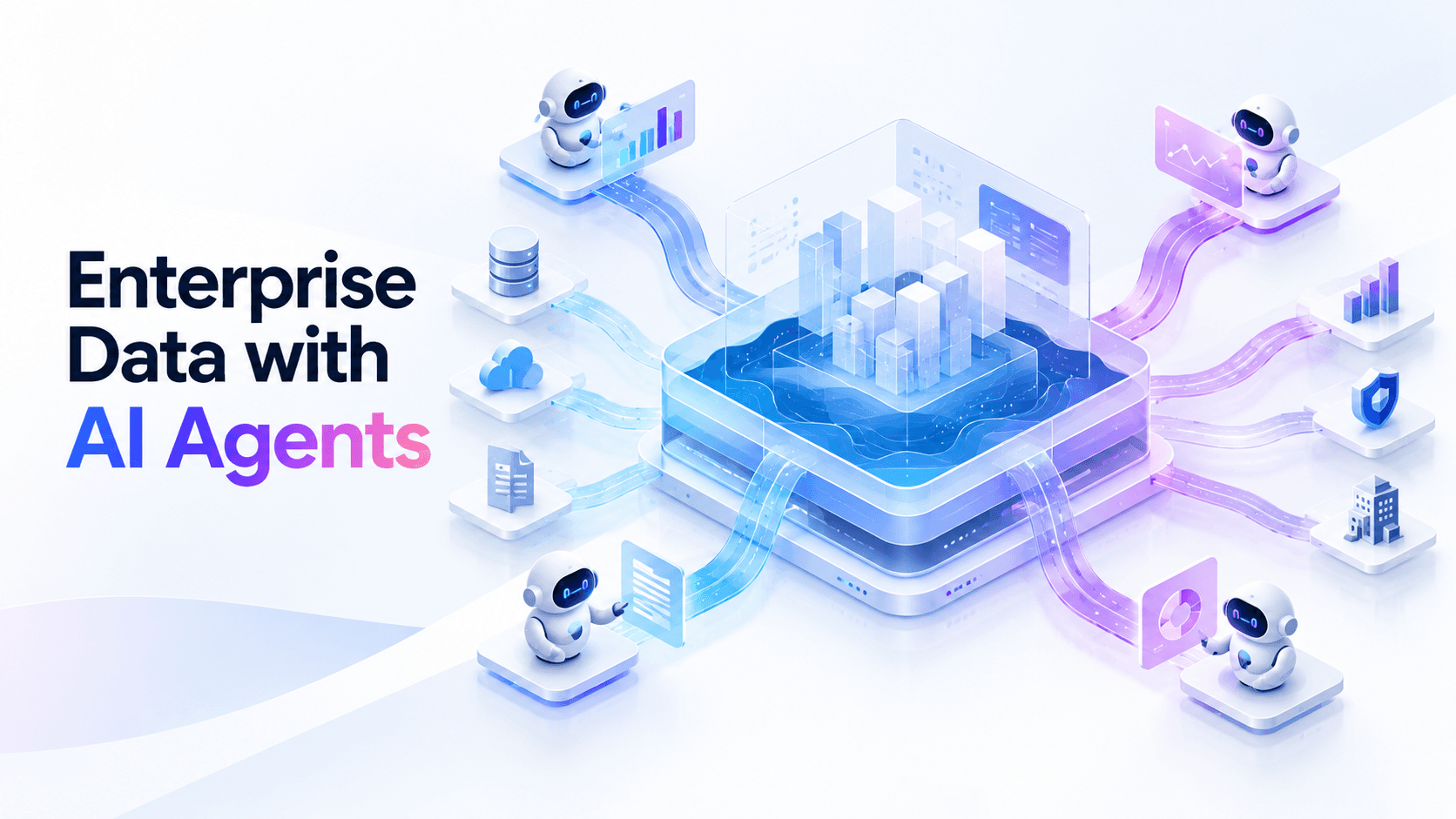
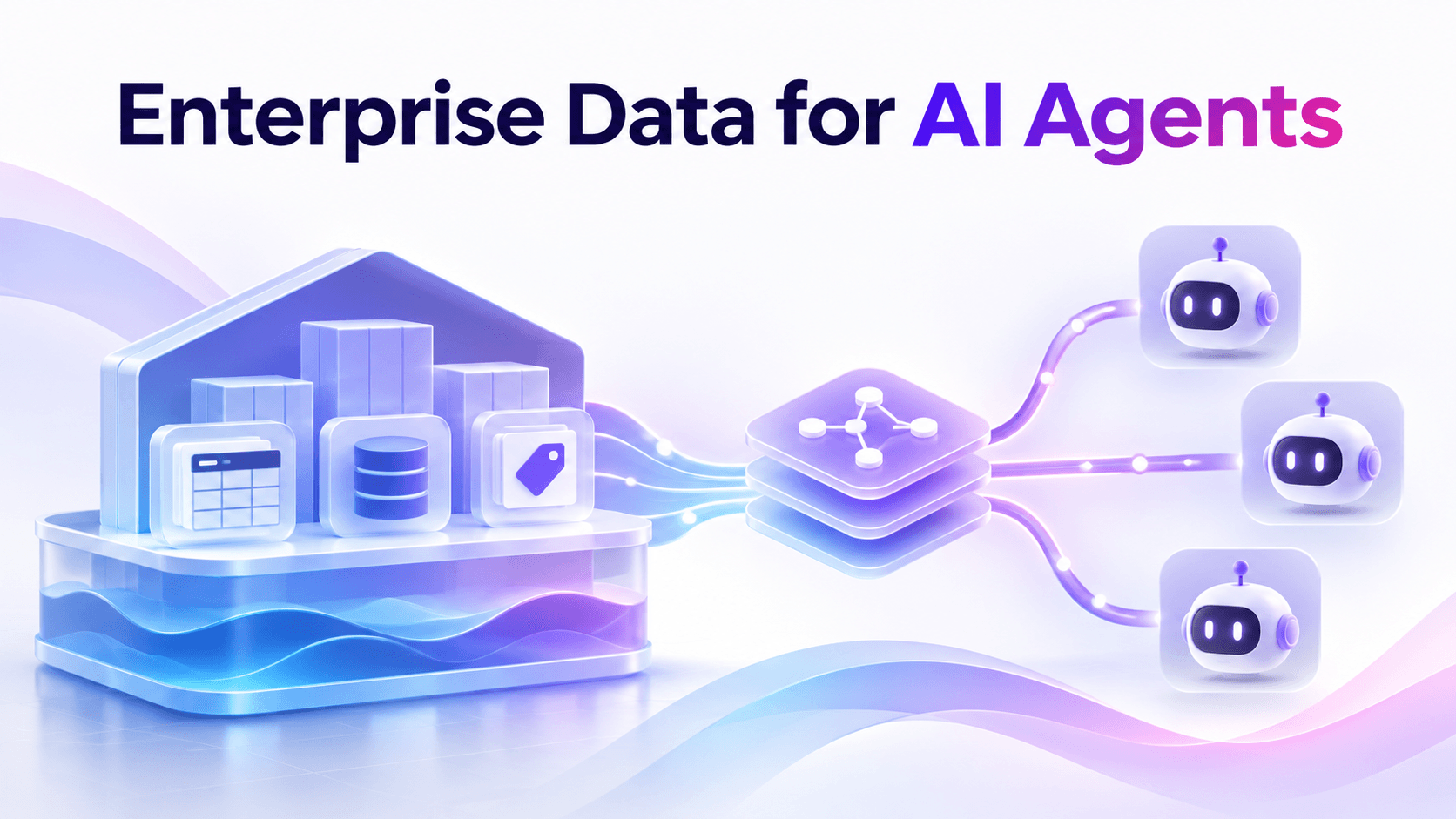
How to give AI agents access to enterprise data that is fast, correct, governed, and affordable: the eight layers between an agent and your tables, organized into the three parts of an agentic lakehouse, and what breaks at each one.

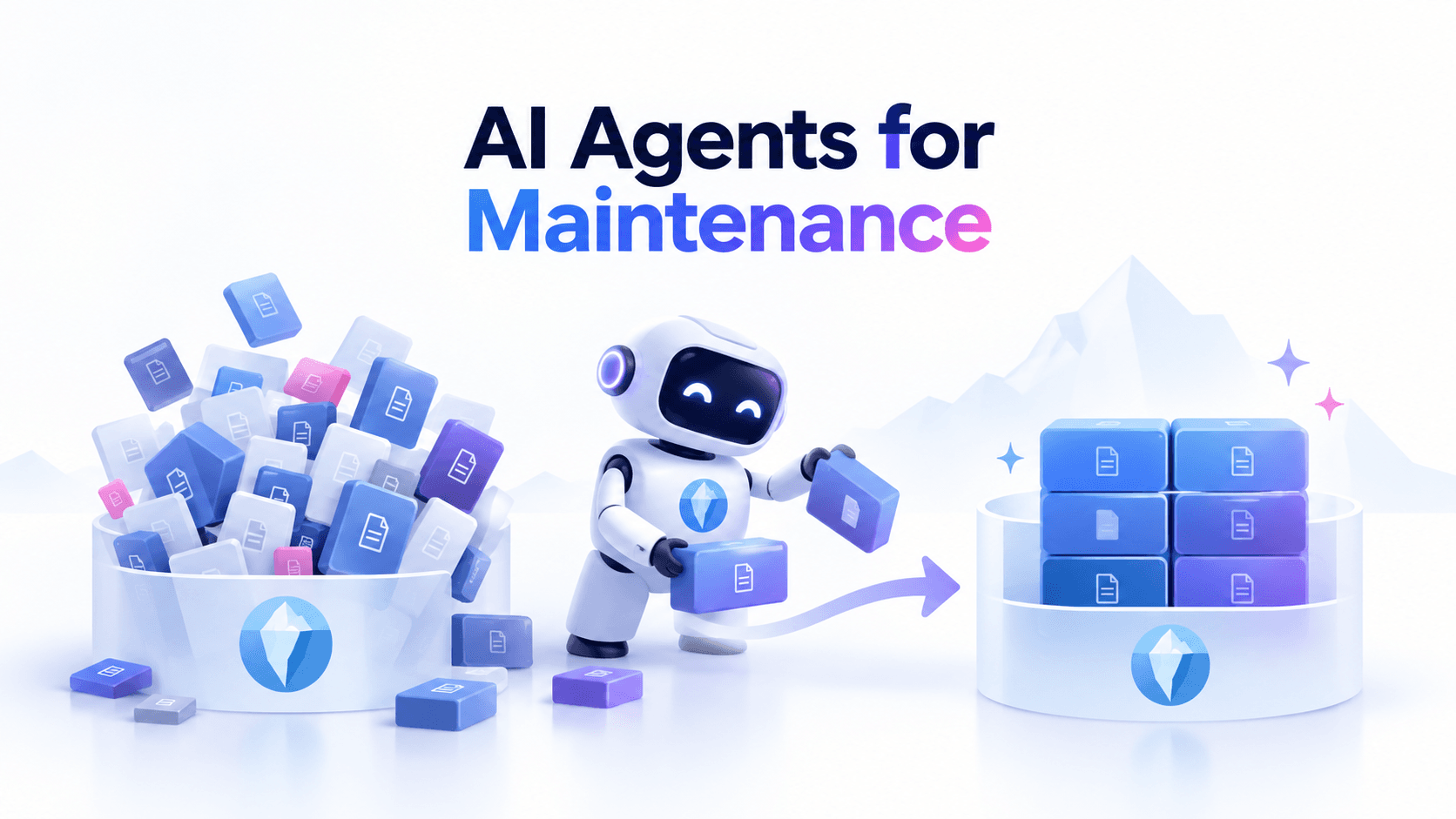
AI agents reason about table health, decide what maintenance each Iceberg table needs, execute operations in the correct sequence, and learn from outcomes. A deep technical guide covering compaction strategies, the Rust/DataFusion engine, and the autonomous maintenance loop.

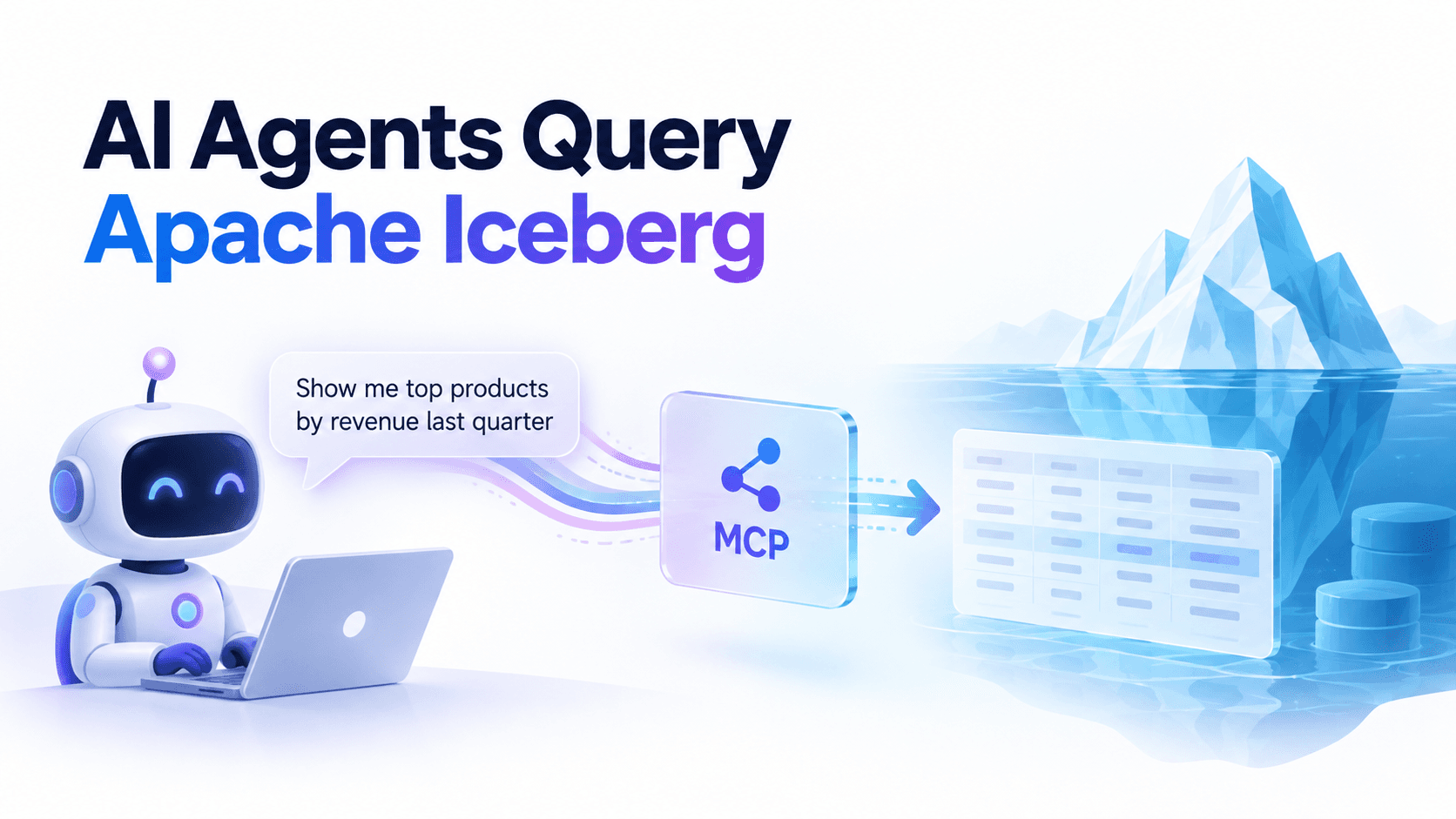
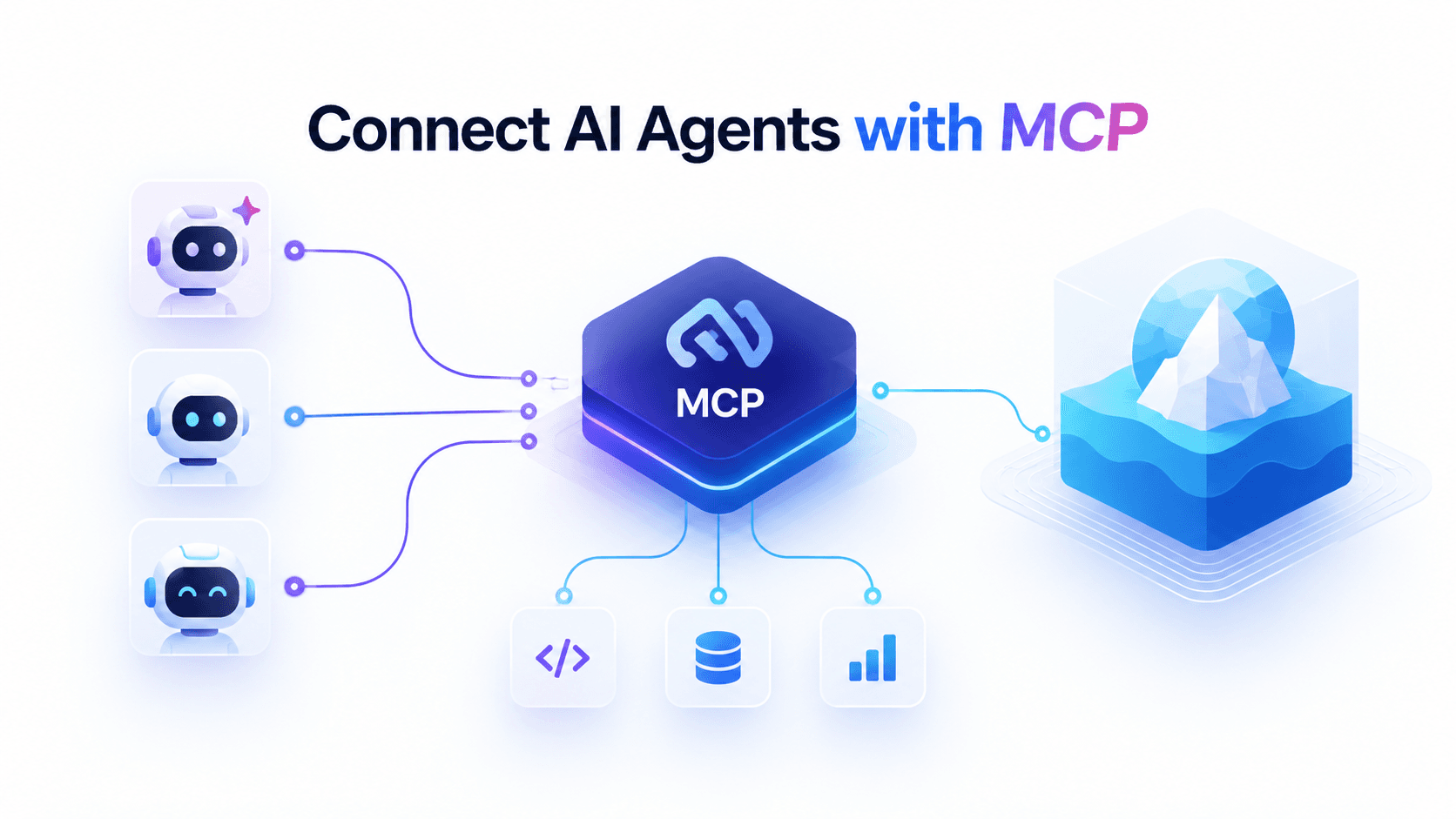
A practical guide to how AI agents query Apache Iceberg tables using MCP — covering schema discovery, SQL generation, guardrails, multi-engine routing, and the control plane that ties it all together.

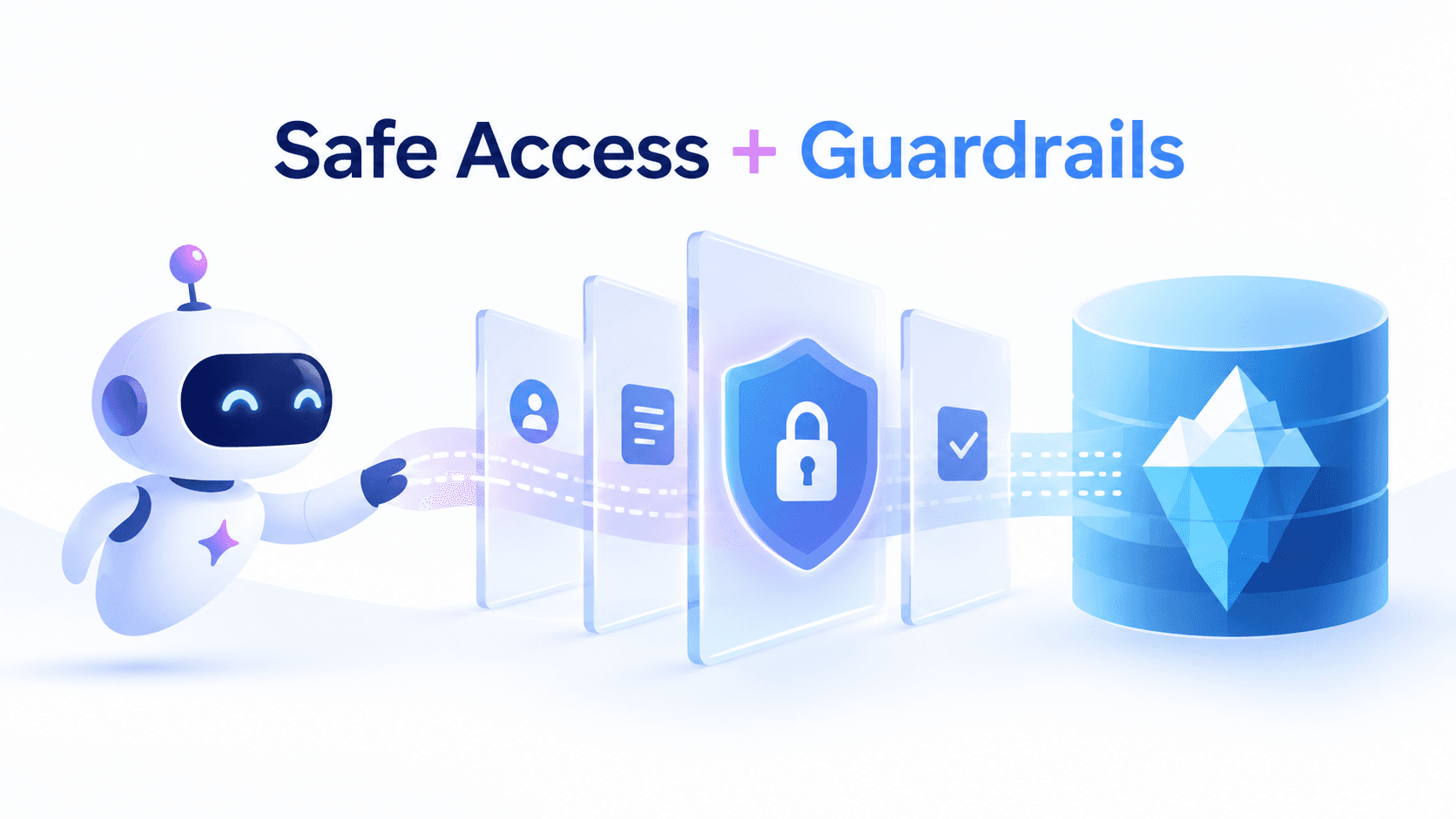
AI agents querying production Iceberg tables can scan petabytes, leak PII, or drop tables — all without human review. This guide covers the guardrails, governance policies, and control plane architecture needed to give agents safe, governed access.

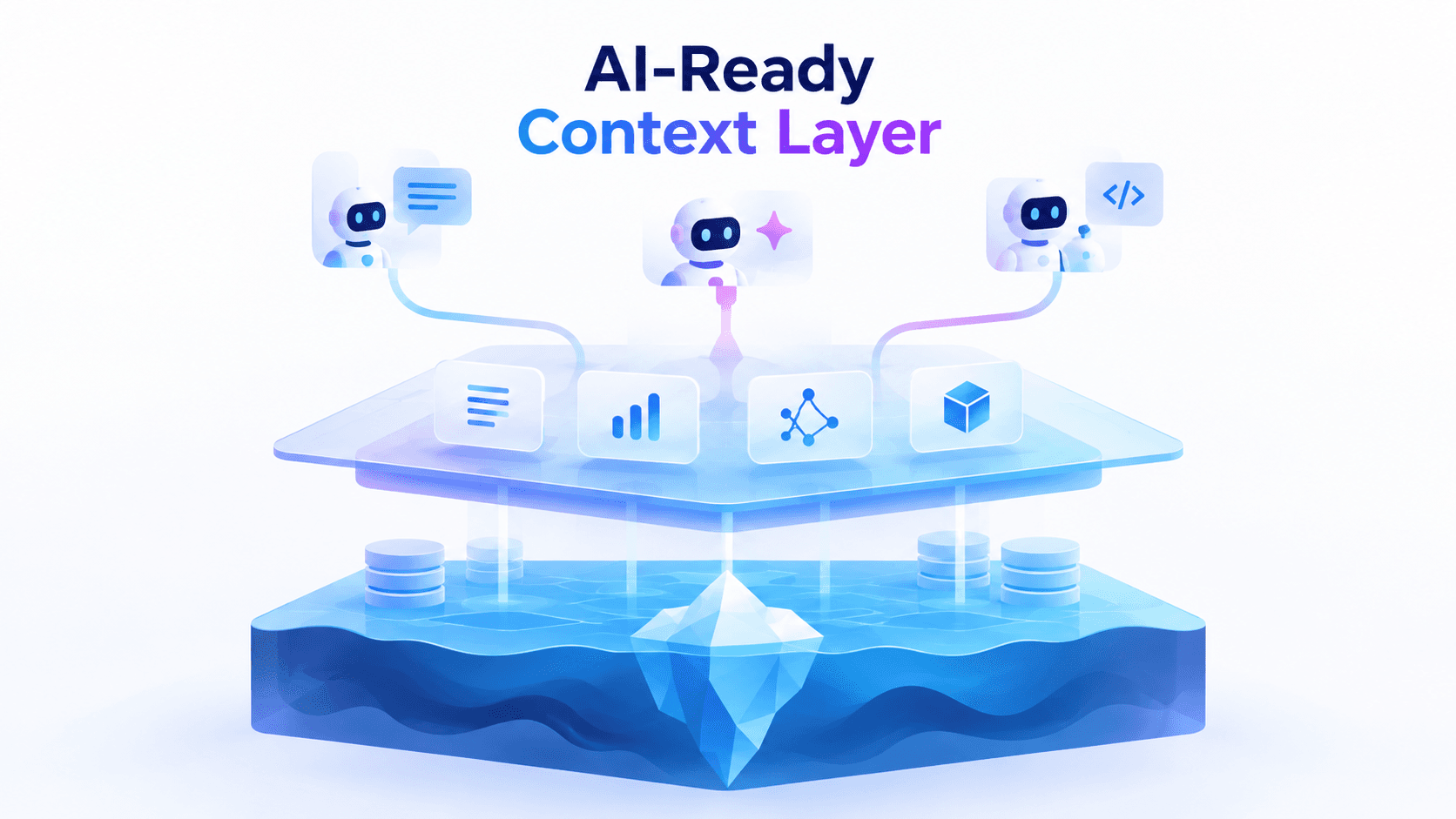
The definitive guide to making your Apache Iceberg lakehouse AI-ready across six dimensions: discoverable, queryable, governed, observable, maintainable, and connected. Includes a practical readiness checklist and scoring framework.

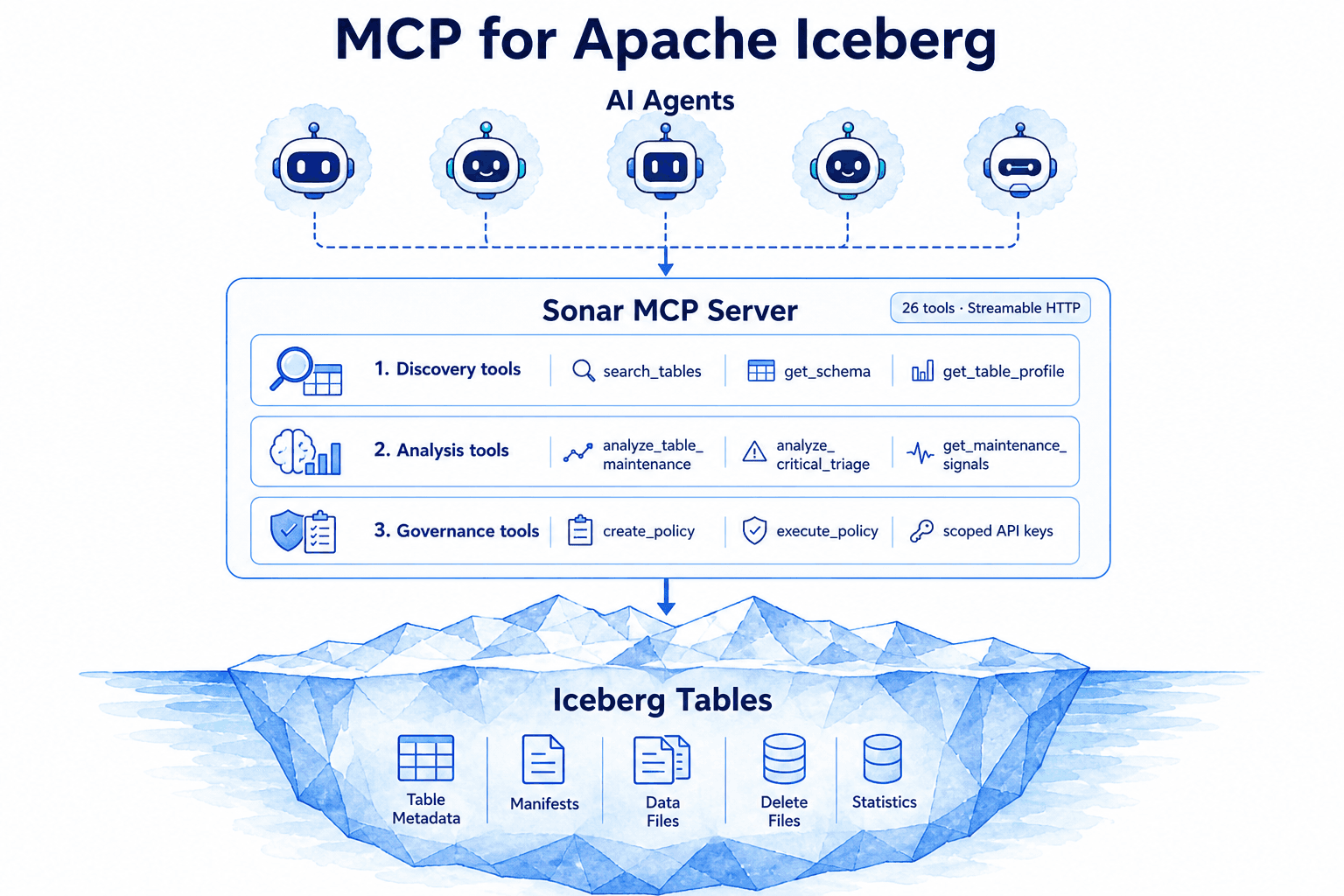
A step-by-step guide to connecting AI agents to your Apache Iceberg lakehouse using MCP and the LakeOps control plane — from API key setup to 27 auto-discovered tools for discovery, analysis, guardrails, and governance.

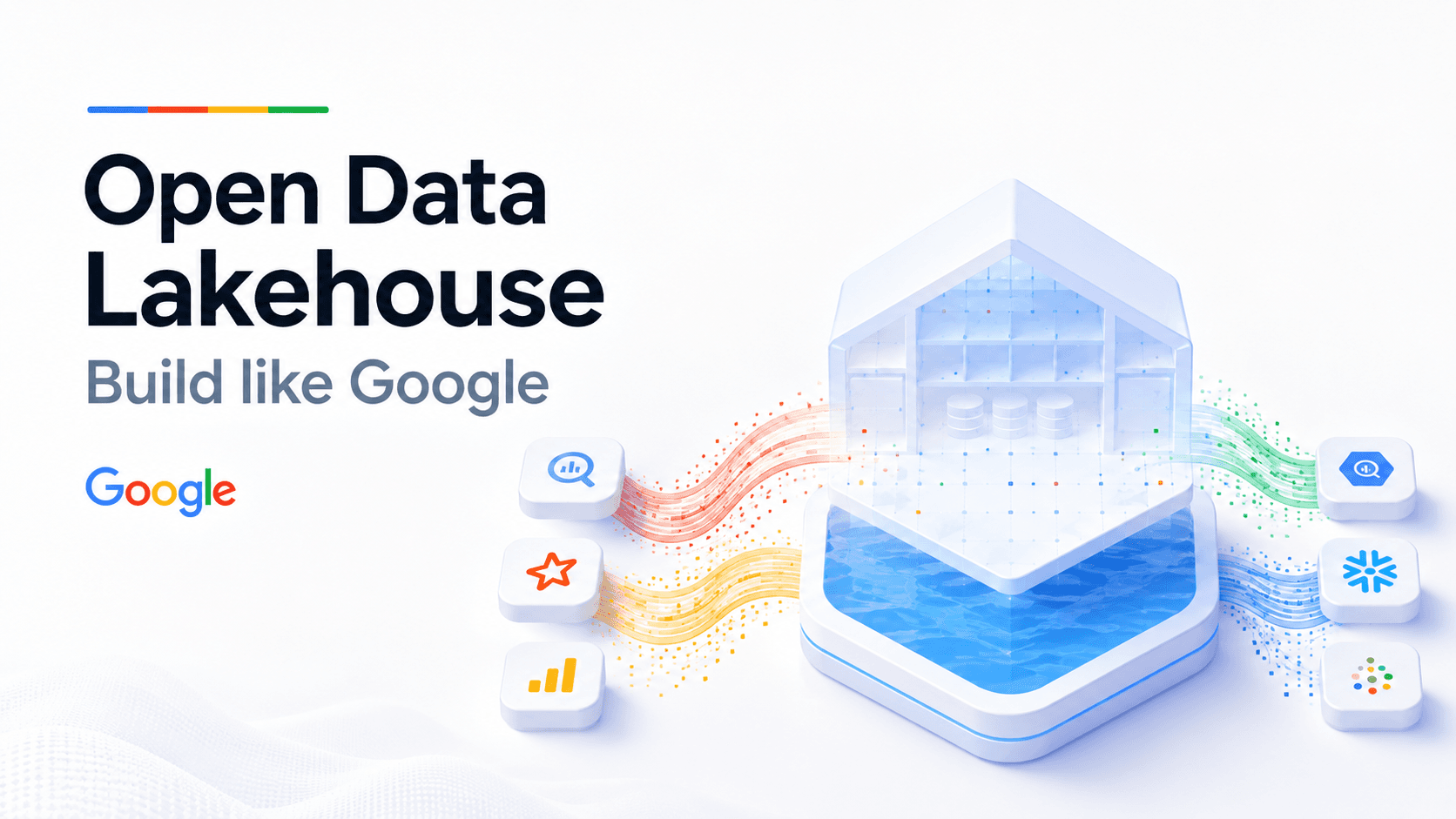
Google engineered a multi-layered Iceberg lakehouse — autonomous storage optimization, vectorized native execution, catalog federation, and credential vending. Learn their 6-layer optimization framework and how to build the same architecture with an open, engine-neutral control plane.

The AI lakehouse is what happens when your data lake stops being passive storage and starts managing itself. Autonomous maintenance, query-aware compaction, multi-engine routing, continuous observability, and an agent interface layer — all working together so the lake stays healthy, fast, and ready for both human analysts and AI agents.

Your Iceberg tables are degrading right now — small files accumulating, snapshots pinning storage, manifests fragmenting — and the fix requires operational knowledge no LLM has in its weights. MCP bridges that gap. This post shows how purpose-built MCP tools turn AI agents from chat assistants into operational participants that discover, diagnose, and govern Iceberg tables with the same structured signals your best platform engineer uses.

AI agents fail in production because they are overwhelmed with data but starved for context. The bottleneck is not the model — it is the data stack. Apache Iceberg turns lakehouse storage into a live, versioned context layer that powers structured RAG, schema-aware agents, and governed reasoning grounded in truth.

AI agents are becoming primary consumers of Iceberg lakehouse data — querying tables iteratively, at high frequency, and without human review. This guide walks through the five components your infrastructure needs to support agentic workloads — MCP connectivity, guardrails, multi-engine routing, self-optimizing storage, and observability — and shows how LakeOps provides each one.

Netflix spent years building an intelligent lakehouse — Polaris for catalog management, Autotune for compaction, janitors for cleanup, and Metacat for observability. LakeOps lets every team build the same — and go beyond — in minutes. Here is what an intelligent lakehouse actually requires, and how LakeOps provides each component.

AI agents issue SQL iteratively, repeat query templates at high frequency, and need sub-second responses from tables designed for batch workloads. This post covers what breaks when agents hit a production Iceberg lake — and the five infrastructure layers that fix it: MCP connectivity, guardrails, multi-engine routing, self-optimizing storage, and closed-loop feedback.