Back to all articles

Snowflake articles

Tips, integrations, and architecture patterns for Snowflake — including external tables, Iceberg interop, and cost optimization.

6 articles

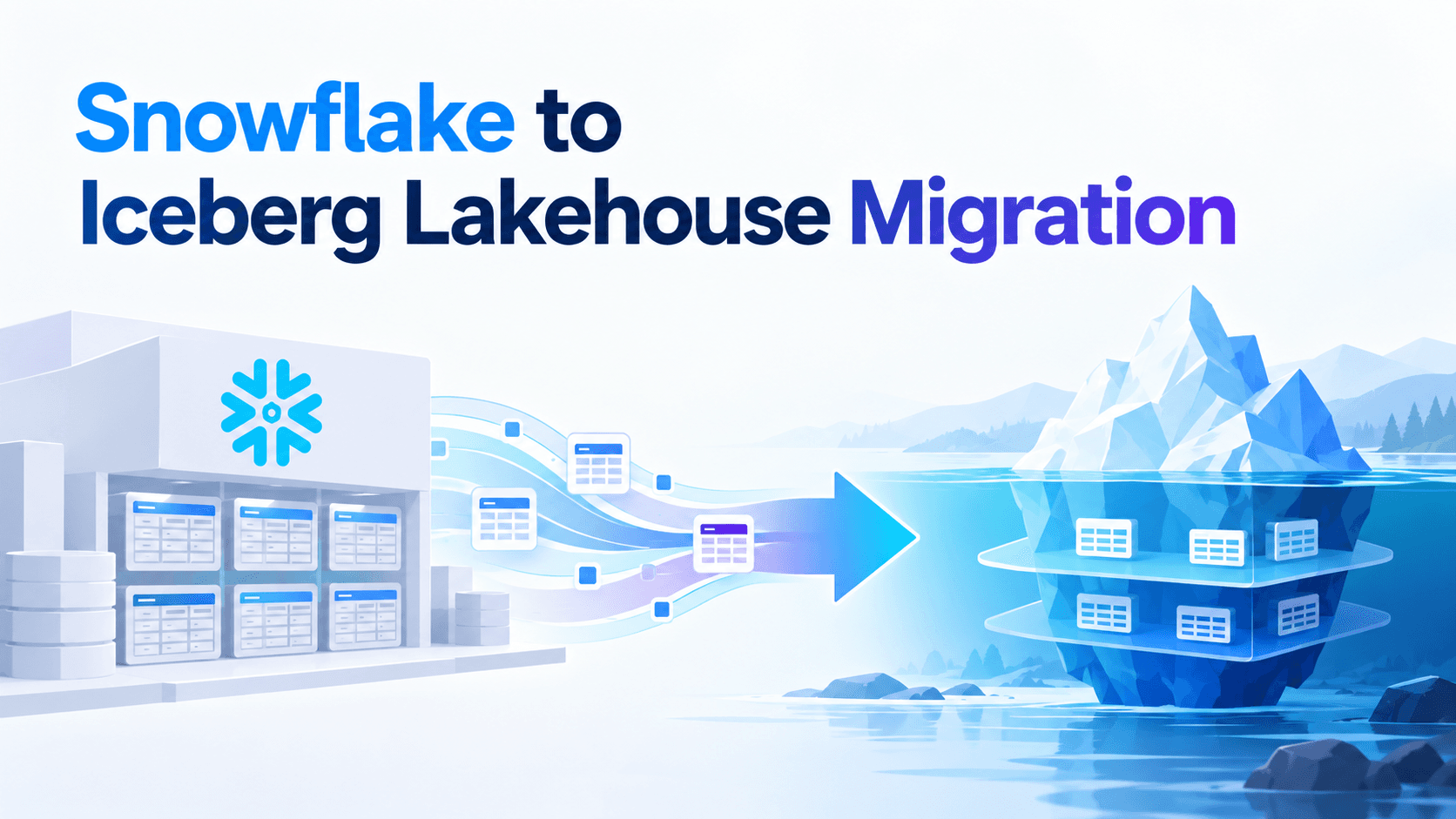
Snowflake to Iceberg lakehouse migration: tables flowing from a Snowflake warehouse into an Apache Iceberg lakehouse on open storage
SnowflakeApache IcebergData Lakehouse

Snowflake to Iceberg Lakehouse Migration Guide

Moving from Snowflake to an Apache Iceberg lakehouse is not a data copy. Snowflake bundles storage, catalog, compute, and operations into one product; Iceberg hands each one back to you. This guide walks the migration phase by phase — inventory, catalog ownership, type translation, data movement, pipelines, workloads, and governance — and shows where a control plane replaces the operations Snowflake used to run invisibly.

Rob M
Rob M
26 min read
Offload Snowflake Queries Without Changing Clients
QueryFluxSnowflakeCloud Cost

Offload Snowflake Queries Without Changing Clients

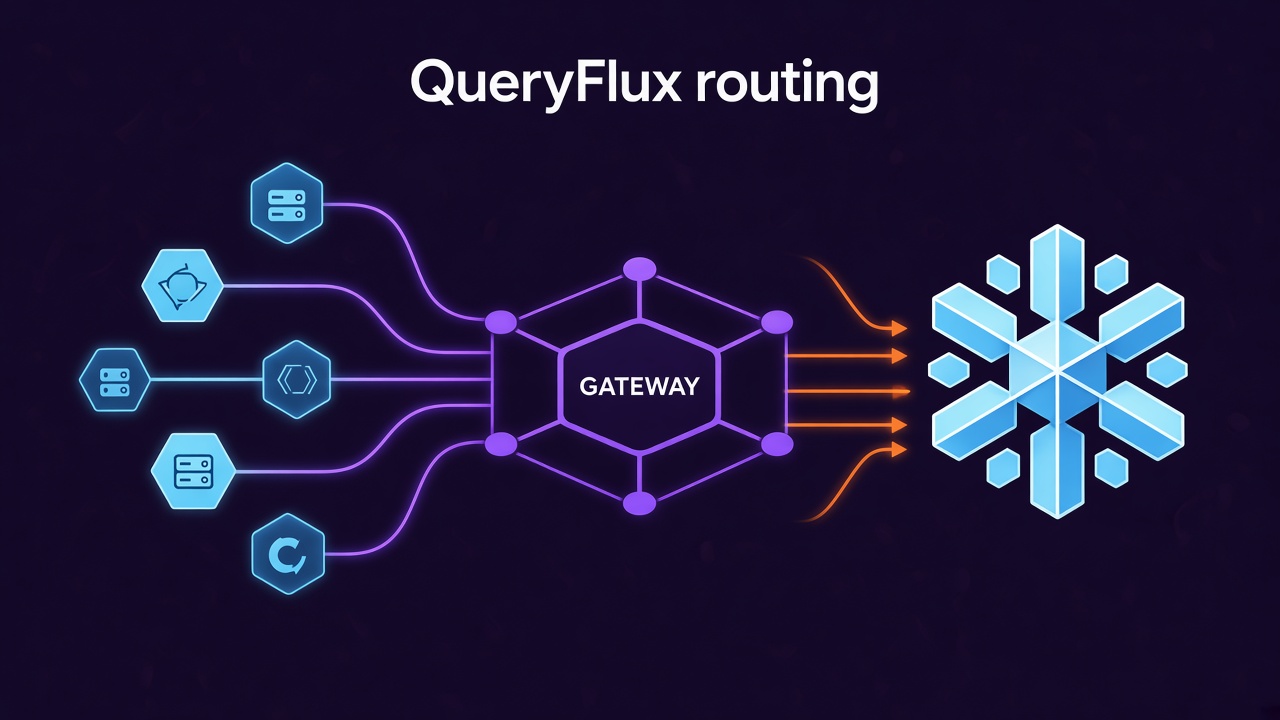
Point Snowflake clients at QueryFlux, keep heavy work on Snowflake, and offload the rest to Trino or StarRocks — no dashboard or notebook rewrites.

Amit Gilad
Amit Gilad
4 min read
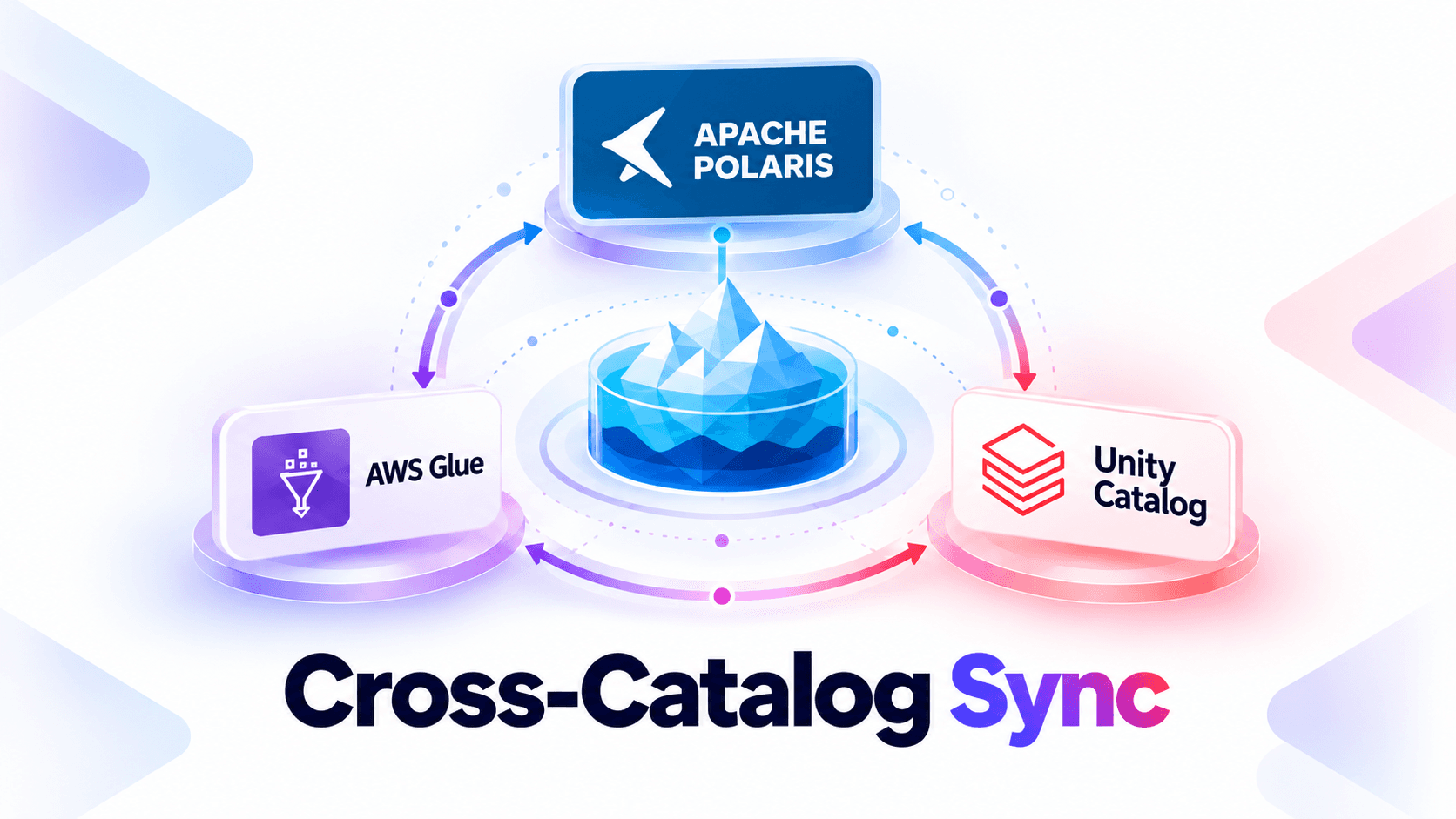
Cross-catalog sync between Apache Polaris, AWS Glue, and Databricks Unity Catalog over shared Apache Iceberg tables
Data PlatformsApache IcebergDatabricks

Cross-Catalog Sync: Iceberg on Polaris, Glue, and Unity

Three Iceberg catalogs, one lake, and no single operational view. Why bidirectional catalog sync is a correctness bug, how federation actually works across Polaris, Glue, and Unity Catalog, and how to run one operating model over catalogs that will never merge.

Chris P
Chris P
27 min read
Snowflake to Iceberg migration — Snowflake tables flowing into an Apache Iceberg lakehouse, illustrating a hybrid multi-engine architecture where Snowflake remains a valued component
SnowflakeApache IcebergLakeOps

Snowflake to Iceberg Smooth Migration

A practical guide for senior data engineers expanding Snowflake into a multi-engine Iceberg lakehouse. Covers five production tools — LakeOps, managed Iceberg, Open Catalog sync, Spark, and AWS Glue — with migration patterns, operational trade-offs, and a phased rollout sequence.

David W
David W
17 min read
Data Lake vs Lakehouse vs Warehouse: A Practical Guide — watercolor illustration comparing a natural data lake (raw flexible storage), a lakehouse (open storage with analytics on the water), and a data warehouse (structured BI building with charts in the windows)
Data PlatformsData LakeLakehouse

Data Lake vs Lakehouse vs Warehouse: A Practical Guide

Data lakes, warehouses, and lakehouses are not interchangeable — each has hard limits the others cannot cover. A practical guide for platform leaders: where each architecture wins, where it fails, cost and governance trade-offs, and how to choose (or combine) them in 2026.

Chris P
Chris P
22 min read
Modern lakehouse architecture: LakeOps control plane for autonomous management and optimization — observability, compaction, routing, AI guardrails, and governance above Iceberg on S3, with catalogs and multi-engine compute (Spark, Trino, Snowflake, Databricks, and more)
Data PlatformsApache IcebergSnowflake

From Databricks and Snowflake to an Open Data Platform

For a decade, Snowflake and Databricks defined enterprise data. Then the lakehouse emerged — open formats on open storage. What was missing was the operational layer to make it work at scale. An autonomous control plane turns a lakehouse into a managed open data platform — without the lock-in.

Jonathan Saring
Jonathan Saring
18 min read